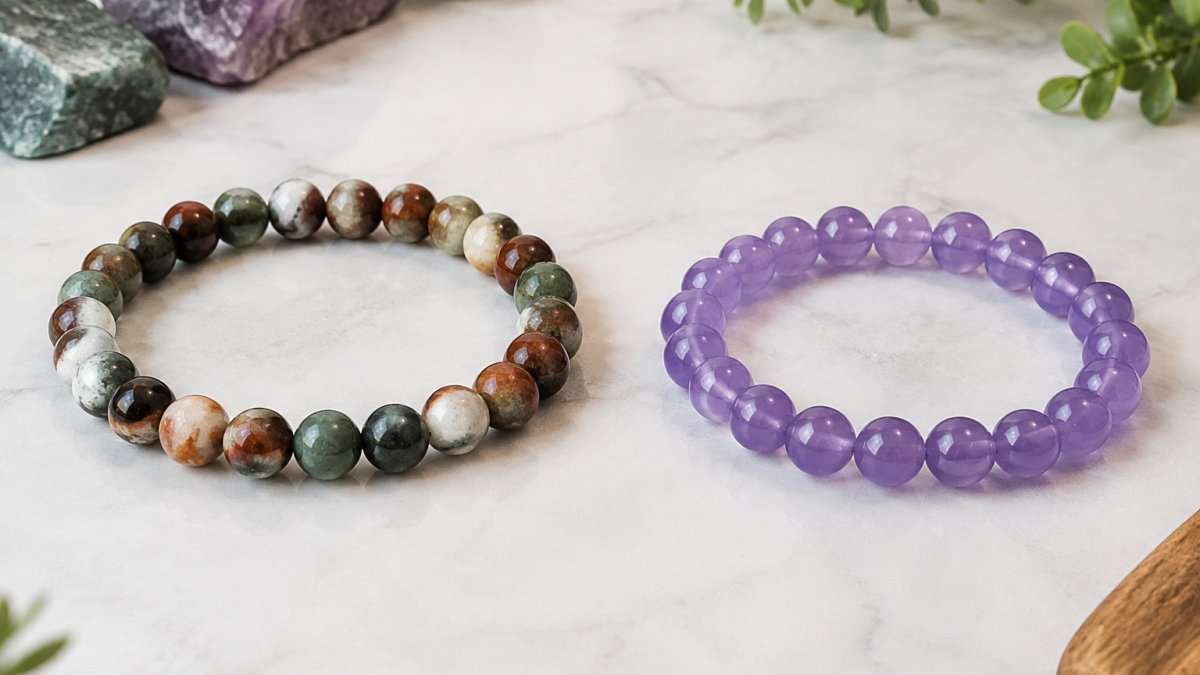

Quick Summary
Jewelry breaks most often because of weak links, failed solder joints, or everyday strain on the clasp and chain. Thin or stretched links, cold or overheated solder, and worn clasp springs all create weak points that give way under normal wear.
- Check where the break happened: the clasp, a link, a solder joint, or a bead or stone.
- A clean snap usually means the metal failed under force, while a stretched link suggests repeated tugging.
- Remove necklaces before showering or exercising, since sweat and soap weaken metal and cords over time.
- Look for smooth, continuous solder at every joint before buying, because lumpy solder cracks under light pressure.
- A jeweler can usually reconnect a broken link, but repeated failure at one spot points to a construction flaw.
Table of Contents
- How to Tell Why Your Jewelry Keeps Breaking
- Chain and Link Weaknesses: Why Necklace Chains Break
- Design Flaws, Solder Joints and Construction Quality
- Everyday Wear, Pulling and Accidental Damage
- How to Prevent Necklace Chain Breakage
- Jewelry Clasps Keep Coming Undone: Causes and Fixes
- Fixing a Broken Chain: What You Can Do Next
- Frequently Asked Questions
How to Tell Why Your Jewelry Keeps Breaking
Last Updated: November 7, 2026
Finding a broken chain or a snapped bracelet is frustrating, especially when the piece was meant to last, and understanding why jewelry breaks makes that frustration easier to manage.
Many people who love handcrafted jewelry also want their pieces to hold up to daily wear.
- At the clasp: Usually a weak spring or a worn jump ring
- Along a link: Often a thin or stretched chain link
- At a solder joint: Typically a construction or repair issue
Look closely at the break itself. A clean snap usually means the metal failed under force. A slow, stretched link suggests repeated tugging over time.
Chain and Link Weaknesses: Why Necklace Chains Break
Necklace chains are the most common point of failure. Their links are small, and every tug travels through them. Learn more about why handcrafted jewelry costs more when stronger link construction is part of the price. Over time, that stress adds up.
Thin links and elongation
Thin links bend more easily under pressure. When a link stretches, it can open up and slip, or it can deform until it finally breaks. Elongated links are a common warning sign.
A link that looks oval rather than round has likely been stretched. Once that happens, the chain rarely returns to its original strength.
Soft metals and material strength
Some metals bend and wear faster than others. Softer metals such as pure gold are more prone to stretching, while harder alloys resist deformation better. Choosing a higher-karat or stronger alloy can make a noticeable difference.
- Check the metal stamp on the clasp or tag
- Choose sturdier chain styles for daily wear
- Pick thicker links if the piece will be worn often
Design Flaws, Solder Joints and Construction Quality
Sometimes the problem starts before the piece ever reaches your neck or wrist. Poor construction creates weak points that fail under normal use, and those failures often look identical to accidental damage. Learning to read the signs of a construction flaw helps you decide whether to repair, return, or replace a piece.
How solder joints fail
Solder is the metal alloy used to join components, a jump ring to a chain end, a clasp to a link, a setting to a band. A properly soldered joint flows smoothly into both surfaces and creates a bond nearly as strong as the surrounding metal. A weak joint does one of three things:
- Cold solder: The joint was heated unevenly, so the solder sits on the surface without penetrating. It looks lumpy or grainy and can crack under light pressure.
- Overheated solder: Too much heat makes the solder brittle and can anneal the base metal, leaving a joint that snaps cleanly rather than bending.
- Insufficient solder: The joint holds initially but has little contact area, so repeated flexing opens a hairline gap that grows over time.
If a chain snaps at the clasp connection, a jeweler repairs it, and it snaps there again within weeks, the original solder joint was likely the problem, not how you wore it.
Distinguishing poor construction from accidental damage
Accidental damage usually leaves evidence of force: a stretched link, a bent clasp, a frayed cord, or a stone knocked loose from its setting. Construction flaws tend to show different signatures:
- Clean breaks at joints with no deformation nearby suggest a weak solder bond.
- Gaps or dark lines at connection points can indicate incomplete solder flow.
- Links that do not sit flat or line up point to assembly errors.
Watch out: A jeweler can usually tell the difference under magnification, so ask for that assessment before accepting a repair quote, it determines whether the fix will hold.
What to inspect before you buy
A well-made piece should feel solid and balanced in your hand. Run through these checks:
- Look at every joint. Solder should be smooth and continuous, not lumpy or gray.
- Flex the chain gently. It should move evenly without kinking or clicking.
- Test the clasp. It should open and close with firm resistance, not rattle.
- Check the jump rings. On better pieces, the ring connecting the clasp to the chain is soldered closed; an unsoldered ring can open under load.
- Examine stone settings. Prongs should grip the stone evenly, with no gaps between the stone and the metal.
If something feels flimsy before you even wear it, it may not survive long. Construction quality is not about price alone, a simple silver chain with soldered joints and a solid clasp will outlast a more expensive piece with unsoldered rings and a hollow clasp. You can learn how to verify authentic handcrafted gemstone jewelry before you buy.
The article lists the main ways a solder joint can fail and the signs that point to a construction flaw rather than accidental damage.
| Joint failure | What it looks like | Typical result |
|---|---|---|
| Cold solder | Lumpy or grainy, sits on the surface | Cracks under light pressure |
| Overheated solder | Joint made brittle, base metal annealed | Snaps cleanly rather than bending |
| Insufficient solder | Little contact area between surfaces | Hairline gap grows with flexing |
Everyday Wear, Pulling and Accidental Damage
Daily habits cause more damage than most people expect, and everyday handling is one of the most common reasons jewelry breaks. Jewelry gets caught on sweaters, pulled over hair, and tugged during sleep.
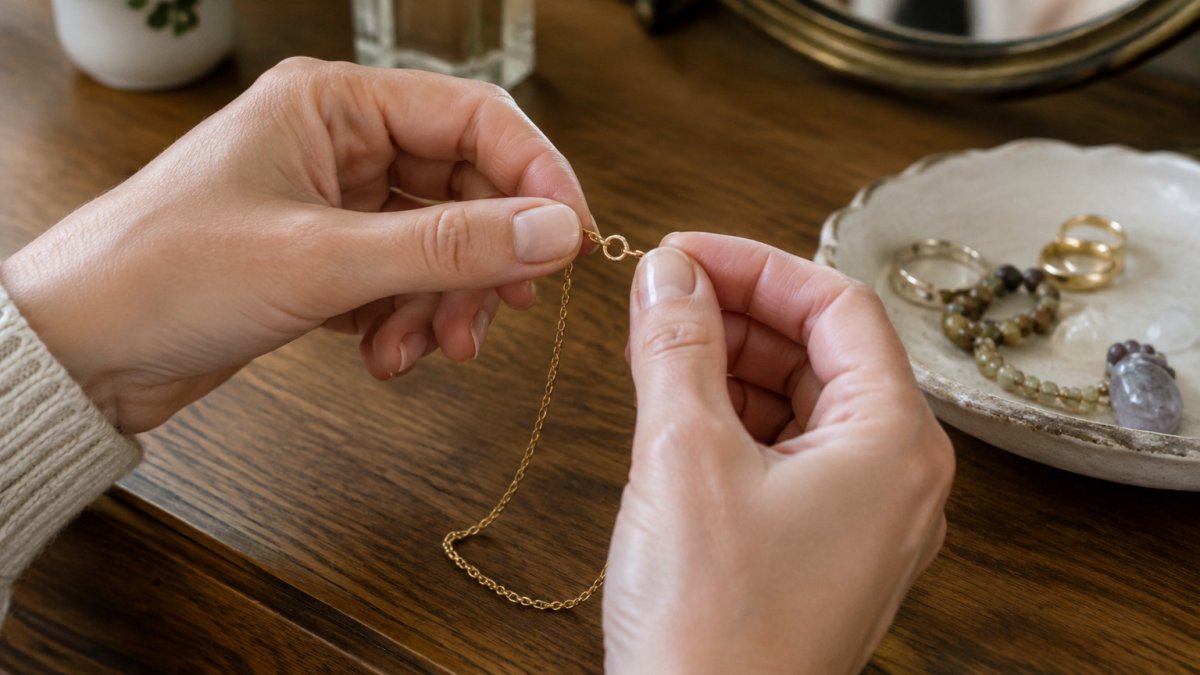
Common sources of accidental damage include:
- Catching a necklace on clothing or bags
- Pulling a bracelet over your hand
- Sleeping in jewelry that tangles
A bracelet can be worn every day for months without trouble, and then one hard tug on a sleeve can snap the cord. The break looks sudden, but the weakness had often been building for a while.
How to Prevent Necklace Chain Breakage
Prevention is easier than repair. If you are looking for durable everyday pieces, see why handmade crystal jewelry is a sturdier choice. A few simple habits can extend the life of your jewelry noticeably.
Follow these steps to protect your necklaces:
- Remove necklaces before showering or exercising. Sweat, soap, and water can weaken metal and cords over time.
- Put them on after applying lotions and perfume. Chemicals can dull finishes and break down cords.
- Store each piece separately. A soft pouch or lined box prevents tangling and scratching.
- Lay necklaces flat when putting them on. Avoid pulling them over your head with a tight grip.
- Check the clasp regularly. Tighten or replace worn components before they fail.
These steps take only a few seconds, but they add up over months and years of wear.
Jewelry Clasps Keep Coming Undone: Causes and Fixes
A clasp that keeps opening is one of the most annoying problems in jewelry. It can also lead to lost pieces, so it deserves attention.
Clasps usually fail for one of three reasons:
- A worn spring: The internal mechanism loses tension over time.
- A stretched jump ring: The small ring that connects the clasp to the chain opens slightly.
- A bent clasp body: Repeated pressure distorts the shape.
Many clasps can be adjusted or replaced by a jeweler. Ask for a sturdier lobster clasp or a secure toggle if the current one keeps failing.
Fixing a Broken Chain: What You Can Do Next
When a chain breaks, act quickly. Gather all the pieces, including any small links or charms, and keep them somewhere safe, a missing jump ring or charm can turn a simple repair into a replacement.
What can be repaired, and what usually cannot
Most chain breaks fall into a few categories, and each has a different repair path:
- Broken link or jump ring: A jeweler can usually reconnect the chain with a new soldered jump ring. This is the most common and least expensive repair.
- Failed solder joint: The joint needs to be cleaned and resoldered. If the same joint has failed before, ask the jeweler to reinforce it rather than repeat the original repair. If you need a replacement, our step-by-step guide to buying handmade crystal necklaces online explains how to choose a sturdier piece.
- Stretched or deformed links: Individual links can sometimes be replaced, but a chain with multiple stretched links has lost overall strength. Repair may not be worthwhile.
Repair, warranty, or replace: a decision framework
Before committing to a repair, work through these questions:
- Is the piece under warranty? Check the original purchase terms. Warranty terms vary, so check the original purchase terms to see which defects and damage are covered. Knowing which category your break falls into determines whether a warranty claim is realistic.
- Has the piece failed at the same point before? Repeated failure at one spot points to a construction flaw. A repair that addresses the root cause, reinforcing the joint, replacing an undersized ring, is worth doing. A repair that simply repeats the original work will likely fail again.
- Is the metal sound elsewhere? A chain with one broken link and otherwise tight, round links is a good repair candidate. A chain with several stretched links, worn clasp components, and thinning metal is near the end of its service life.
- Does the repair cost make sense relative to the piece? For a simple link repair, the cost is usually modest and worth it. For a chain that needs multiple link replacements plus a new clasp, compare the quote against the cost of a comparable new piece. A common pattern is that heavily worn chains cost more to restore than to replace.
- Is the piece sentimental? If the answer is yes, repair often makes sense even when the economics favor replacement, but ask the jeweler to assess whether the repaired piece will be durable enough for continued wear.
What to ask a jeweler
When you take a piece in, ask three specific questions:
- What caused the break? The answer tells you whether to expect the same failure again.
- Will the repair restore the original strength, or just reconnect the pieces? A soldered joint is stronger than a knotted cord or an open jump ring.
- What is the expected lifespan of the repair? A jeweler who is candid about limitations is giving you better information than one who promises a permanent fix.
When replacement is the better choice
Replacement makes more sense than repair when the metal is thin or heavily worn, when the piece has failed at multiple points, when a matching stone cannot be sourced, or when the repair quote approaches the cost of a new piece of similar quality.
GCDJewelry creates handcrafted pieces in Ontario, Canada, with a focus on natural gemstones. Browse our collection to find a piece suited to everyday wear.
Frequently Asked Questions
Why does my jewelry keep breaking?
Repeated breakage usually comes from a combination of factors: thin or soft metal, a weak solder joint, a clasp that is worn or undersized, or daily habits like pulling the chain over your head or wearing it in the shower and while exercising. If the same piece breaks in the same spot, the cause is almost always the construction at that point rather than bad luck. Checking where the break happens tells you whether to look at material, design, or handling. If a piece fails within normal wear, contact the maker about their warranty or repair policy.
Can a jeweler repair a broken chain or clasp?
Yes. A professional jeweler can usually re-solder a broken link, replace a jump ring, or swap out a clasp entirely. Repair cost depends on the metal, the damage, and whether a part needs to be replaced, so ask for a written quote before work begins. Bring the piece with its clasp and any broken pieces. For GCD Jewelry pieces, check the brand's website for current contact or support information before you pay a third party.
How can I stop my necklace from breaking?
Store necklaces flat or hung separately so chains do not tangle, put them on after applying lotion, perfume, and hair products, and take them off before showering, swimming, or exercising. Avoid pulling the chain over your head. Instead, open the clasp and lift the necklace from the back. Check links and the clasp every few weeks for thinning, gaps, or looseness, and address small issues early before they become a full break.
Does sleeping in jewelry make it break faster?
It can. Sleeping in a necklace or bracelet exposes it to tugging, twisting, and pressure against the pillow, which stretches links and loosens clasps over time. Removing jewelry at night is the simplest way to reduce this stress. If you do sleep in a piece, choose one with a secure, well-made clasp and check it regularly for wear.