
Table of Contents
- Why Authenticity Matters When Buying Handcrafted Gemstone Jewelry
- How to Tell if a Gemstone is Real
- Understanding Natural Gemstone Jewelry Materials
- Verifying Artisan Craftsmanship and Canadian-Made Production
- Choosing Handmade Gemstone Bracelets for Everyday Wear
- Gemstone Jewelry Care and Maintenance
- Ethical Sourcing and Conflict-Free Gemstones
- Frequently Asked Questions
Last Updated: October 20, 2026
Why Authenticity Matters When Buying Handcrafted Gemstone Jewelry
When you're shopping for authentic handcrafted gemstone jewelry in Canada, you're making a choice about what goes on your body and what you're supporting with your money. The difference between genuine pieces and mass-produced imitations matters more than most people realize.
At GCDJewelry, we've spent years sourcing and creating pieces that meet a simple standard: they're real, they're made by hand, and they're built to last. But knowing how to verify authenticity yourself is equally important.
The stakes are real. You might pay $45 for a bracelet that looks beautiful but falls apart in three months. Or you might invest $50 in a piece from a real artisan that you wear for years.
How to Tell if a Gemstone is Real
The most straightforward way to verify a gemstone's authenticity starts with direct observation. Real gemstones have characteristics that imitations simply cannot replicate consistently. Mass-produced fakes are designed for speed and cost, not accuracy. That's where you find your advantage.
Visual Inspection and Natural Variation
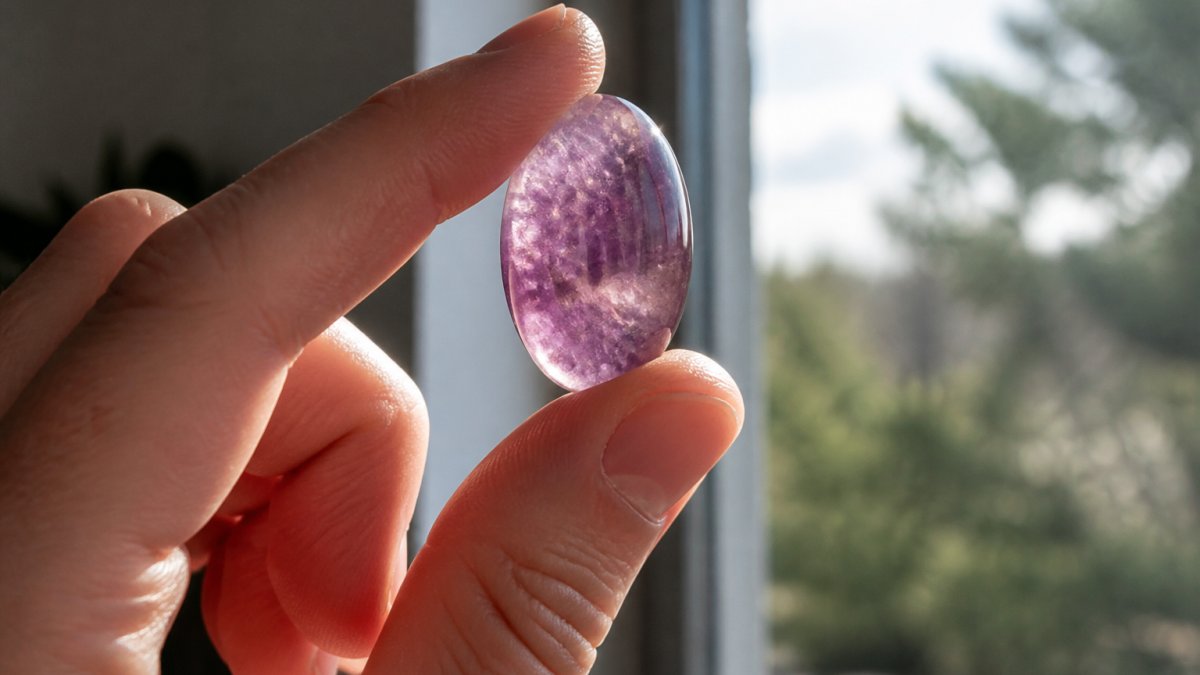
Authentic natural gemstones show variation. No two aquamarines are identical. No two rose quartz pieces have the same color saturation or internal patterns.

Real gemstones also show what gemologists call "inclusions", tiny imperfections, mineral traces, or internal structures visible under magnification or sometimes to the naked eye. These aren't flaws. They're proof of authenticity. Synthetic stones are manufactured to be "perfect," which paradoxically makes them easier to spot as fake.
Hold the stone up to natural light and observe it from different angles. Genuine stones refract light in specific ways depending on their mineral composition. A real aquamarine will show a specific blue tone that shifts slightly as you move it.
Weight, Clarity, and Color Consistency
Real gemstones have specific gravity, the weight relative to their volume. This is measurable and consistent within each stone type. If a bracelet feels unusually light for its size, the stones may not be what they claim to be.
Clarity tells you something important too. Some stones are naturally cloudy (like moonstone, which has a milky appearance by nature). Others, like aquamarine, should show transparency.
Color consistency within a single stone type is telling. Natural amethyst ranges from pale lilac to deep purple, but each individual bead will have its own tone. The Gemological Institute of America's guide to gemstone identification explains that natural color variation is one of the strongest authenticity markers.
Understanding Natural Gemstone Jewelry Materials
The metals that hold your gemstones matter as much as the stones themselves. Real handcrafted jewelry uses materials that age well and hold up to daily wear. Mass-produced pieces often cut corners here, which is where they fail first.
Sterling Silver, Gold, and Copper in Handmade Pieces
Sterling silver is the standard for affordable, durable handcrafted jewelry. It's 92.5% pure silver mixed with other metals (usually copper) for strength. Real sterling silver tarnishes over time, that's normal and expected.
14k gold or higher is what you'll find in quality handmade pieces. Lower karatage (like 10k) is more durable but contains less actual gold. Higher karatage (18k or 22k) is softer and better for delicate designs.
Copper appears in many artisan designs, especially for healing crystal bracelets. Genuine copper develops a natural patina over time, a darkening or color shift that shows the metal is responding to air and moisture. This is authenticity in action.
GCDJewelry uses quality metals throughout our collection because they're built to last.
Polished vs. Unpolished Stones and Durability
Polished gemstones have a smooth, finished surface that reflects light evenly. This is what most people picture when they think of jewelry stones. Polished stones are easier to clean and maintain, and they show off the stone's color and clarity more dramatically.
Unpolished or raw stones have a more natural, textured surface. They're often more affordable because they require less finishing work. Raw stones can be stunning, but they're also more porous and can absorb oils, sweat, and dirt more easily.
For everyday wear, work, exercise, showering, polished stones are the practical choice. They're sealed and finished in a way that protects them. Unpolished stones work better for pieces you wear occasionally or for people who are gentle with their jewelry.
Verifying Artisan Craftsmanship and Canadian-Made Production
Here's where a lot of confusion happens. "Handcrafted" and "artisan" are marketing terms that get thrown around without much meaning. Real handmade pieces show evidence of the craft. Mass-produced pieces designed to look handmade are getting better at faking it, but there are tells.
What Handcrafted Really Means
Genuine handcrafted jewelry is made by a person, not a machine. That means each piece has minor variations. The spacing between beads might be slightly different on two bracelets. The way a stone is wrapped or set will have subtle differences.
If you're buying from a Canadian artisan, you should be able to find out where they're based and how they work. GCDJewelry is based in Ontario and creates pieces in-studio. We can tell you exactly how each design is made because we make it.
Real artisans also limit production. They can't make 500 identical bracelets in a week. If a "handmade" shop is selling hundreds of identical pieces at low prices, something doesn't add up.
Questions to Ask Before You Buy
Before you commit to a purchase, ask the maker directly:
- Where is this piece made? (A real answer: "In my studio in Ontario." A vague answer: "Responsibly sourced.")
- How long does this piece take to make? (Real answer: "About 45 minutes per bracelet." Vague answer: "It's made with care.")
- What's the metal content? (Real answer: "Sterling silver, 92.5%." Vague answer: "High-quality metal.")
- Are the stones natural or treated? (Real answer: "Natural aquamarine, no heat treatment." Vague answer: "Genuine gemstones.")
- What's your return or repair policy? (Real answer: A clear policy with timeframes. Vague answer: "We stand behind our work" without specifics.)
An artisan who can answer these questions confidently is someone who knows their craft. Someone who deflects or gives generic responses might be reselling mass-produced pieces.
Choosing Handmade Gemstone Bracelets for Everyday Wear
Not all handcrafted gemstone jewelry is suitable for daily wear. Some pieces are delicate and need careful handling. Others are built tough. Knowing the difference before you buy saves you from disappointment.
Ocean Jasper Teardrop Pendant | Stone of Joy | Cancer Zodiac →
Durability, Comfort, and Sizing
Durability depends on three factors: the stone's hardness, the metal's strength, and how the piece is constructed. Harder stones (like amethyst and aquamarine) resist scratching and damage better than softer stones (like moonstone or selenite).
Comfort is about weight and fit. A heavy bracelet feels different than a light one. Some people prefer the grounding sensation of weight; others find it restrictive. Fit matters too.
Sizing is critical for bracelets. The Canadian Standards Association guidelines on jewelry sizing provide reference points, but the simplest approach is to measure your wrist with a soft tape measure where the bracelet will sit.
The Aquamarine, Rose Quartz & Peach Moonstone Bracelet from GCDJewelry is designed for everyday wear.
Stone Selection for Daily Activities
If you shower, exercise, or work with your hands, your stone choice matters. Some stones are more resilient than others.
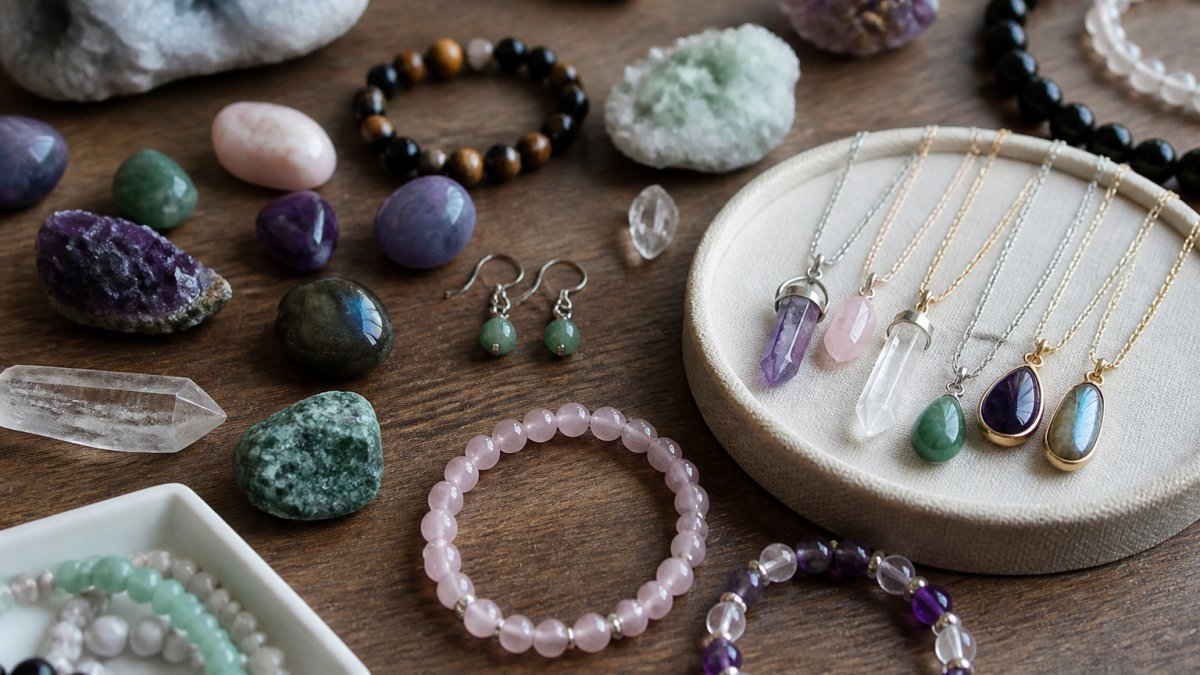
Aquamarine and amethyst are tough choices for daily wear. They resist scratching and can handle moisture. Rose quartz is slightly softer but still practical for everyday use. Moonstone and labradorite are beautiful but more delicate, they're better for occasional wear or protective settings.
Avoid wearing softer stones like selenite, lepidolite, or raw crystal points during activities where they might get knocked around. These are better for meditation, display, or gentle wear.
Gemstone Jewelry Care and Maintenance
Real handcrafted jewelry rewards proper care. A piece that's cleaned and stored thoughtfully will look beautiful for years. Neglected pieces deteriorate quickly, no matter how well they were made initially.
Cleaning Without Damage
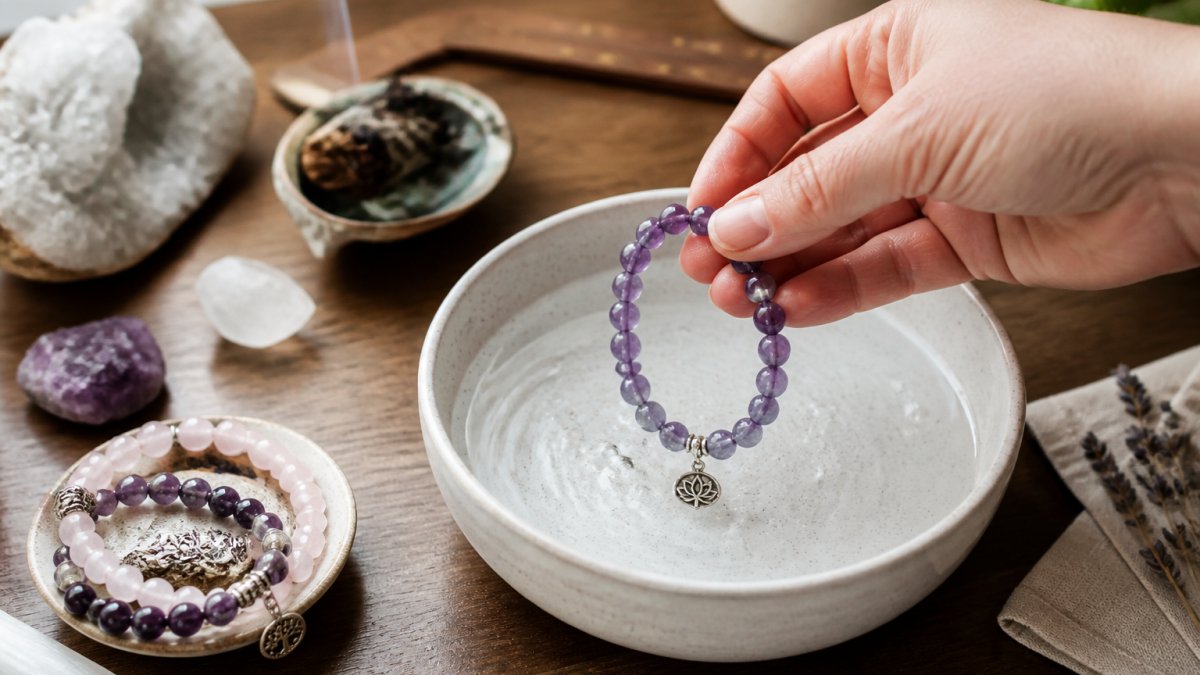
The safest cleaning method for most gemstone jewelry is simple: warm water and a soft cloth. No harsh chemicals. No ultrasonic cleaners (these can crack delicate stones). No abrasive scrubbing.
After wearing your bracelet or necklace, wipe it gently with a soft, dry cloth. This removes oils, sweat, and dust. For deeper cleaning, use lukewarm water with a tiny drop of mild dish soap.
Some stones are porous and absorb water (like moonstone and selenite). The Gemological Institute of America's jewelry care recommendations provide stone-specific guidance if you're unsure about a particular piece.
Avoid perfume, lotion, and household chemicals on your jewelry. These can dull stones and damage metal finishes. Put your jewelry on after you've applied skincare products, not before.
Storage and Long-Term Care
Store your gemstone jewelry in a cool, dry place away from direct sunlight. Prolonged sun exposure can fade some stones (notably amethyst). A soft pouch or jewelry box works well. Keep pieces separated so they don't scratch each other.
If your bracelet uses a cord or elastic, inspect it regularly. Cords stretch and weaken over time. If it starts to fray or feel loose, it's time to have it restrung. Many artisans offer this service affordably.
For pieces with metal components, a gentle polish with a soft cloth keeps them looking bright. If tarnish builds up on sterling silver, use a silver polishing cloth (not harsh chemicals). The tarnish is part of the aging process, but light polishing keeps pieces looking intentional.
Ethical Sourcing and Conflict-Free Gemstones
Where your stones come from matters. Ethical sourcing means the gemstones were extracted responsibly and the people involved in the supply chain were treated fairly.
"Conflict-free" refers to gemstones that weren't mined in war zones or used to finance armed conflict. This standard matters most for diamonds and rubies, but it's worth considering for any stone.
Natural gemstones sourced responsibly cost more than stones from unknown origins. That's a trade-off worth making if ethical sourcing aligns with your values.
Ask your maker where their stones come from. "I source locally when possible" or "I work with a supplier in [specific region]" are real answers. "Ethically sourced" without specifics is marketing language without substance.
Choosing authentic handcrafted gemstone jewelry means knowing what to look for and asking the right questions. GCDJewelry's collection of handcrafted gemstone bracelets and necklaces is designed with this standard in mind: natural stones, sterling silver construction, and transparent sourcing so you know exactly what you're getting.
Frequently Asked Questions
How can you tell if a gemstone is authentic?
Authentic gemstones show natural variation in color and pattern, no two stones are identical. Real stones feel heavier than glass and have consistent clarity when held to light. Check for air bubbles (a sign of glass) and verify the stone's weight against its size. Reputable artisans like those at GCD Jewelry hand-select each stone and can describe its origin and any treatments. Ask the maker for details about where the stone came from and how it was processed.
What's the difference between natural gemstone jewelry and lab-created stones?
Natural gemstones form over millions of years in the earth and carry unique internal characteristics, inclusions, and color variations that make each piece one-of-a-kind. Lab-created stones are chemically identical but made in controlled conditions, often lacking the subtle depth and rarity of natural gems. Handcrafted natural gemstone jewelry, like pieces from GCD Jewelry, celebrates these natural imperfections as proof of authenticity. Natural stones typically hold their appeal longer because their uniqueness doesn't fade.
How do you care for gemstone jewelry to make it last?
Wipe your gemstone jewelry with a soft, dry cloth after wearing to remove oils and dust. Avoid harsh cleaners, prolonged water exposure, and ultrasonic cleaners, which can damage soft stones or weaken settings. Store pieces separately so they don't scratch each other. Some stones like amethyst can fade in strong sunlight, so keep them away from sunny windowsills. For handmade gemstone bracelets, roll them gently on and off rather than overstreching the cord. Regular, gentle care keeps your piece beautiful for years.
Why is handcrafted gemstone jewelry more expensive than mass-produced alternatives?
Handcrafted pieces cost more because each one is individually designed, hand-selected for stone quality, and made by skilled artisans. Mass production uses lower-grade materials and standardized processes. Authentic handmade work involves time spent sourcing genuine stones, hand-setting them, and quality-checking every detail. When you buy from makers like GCD Jewelry, you're supporting small artisan studios and ensuring ethical sourcing. The durability and uniqueness of a handcrafted piece typically outlasts cheaper alternatives, making it a better long-term investment.