
Table of Contents
- Natural Gemstone Bracelets: What Makes Them Different
- How to Tell if Gemstones Are Natural: A Practical Guide
- Gemstone Bracelet Collections by Stone Type
- Natural Gemstone Bracelets for Men: Styling and Selection
- Gemstone Bracelet Sizing for Men and Women
- How to Care for Gemstone Bracelets
- Handmade Bracelets: Why Artisanal Craftsmanship Matters
- Frequently Asked Questions
Last Updated: October 9, 2026
Natural Gemstone Bracelets: What Makes Them Different
When you buy natural gemstone bracelets, you're choosing jewelry that carries authenticity and intention.
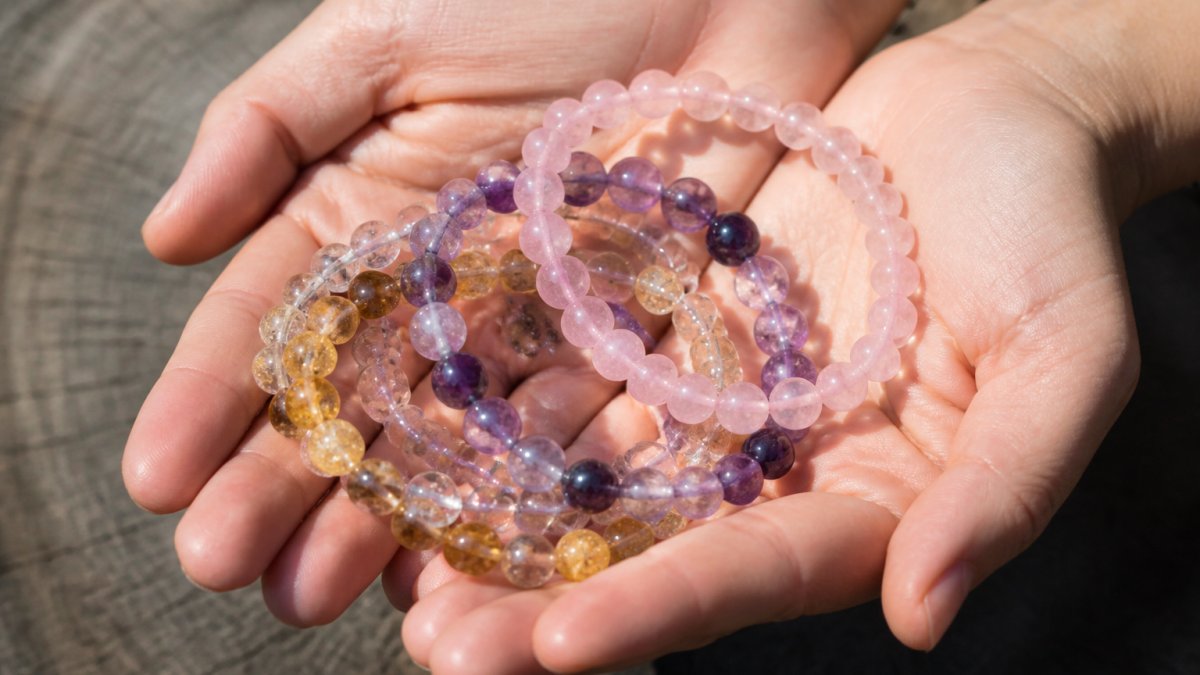
Natural gemstones differ fundamentally from synthetic or lab-created stones. The difference matters when you're wearing something daily. A handcrafted bracelet with authentic aquamarine, rose quartz, or citrine feels substantial in your hands.

When you choose to buy natural gemstone bracelets, you're also supporting artisanal craftsmanship.
How to Tell if Gemstones Are Natural: A Practical Guide
The most common question we hear is simple: how do you know if gemstones are actually natural?
Real natural gemstones show visible characteristics that lab-created or treated stones typically don't. Genuine amethyst often has lighter and darker purple zones, and real rose quartz may appear slightly cloudy.
Weight and density offer another clue. Hold a genuine citrine bracelet next to a glass imitation: natural stone feels noticeably heavier.
Temperature is a practical test. Press a genuine rose quartz bead against your skin; it feels cool initially, then warms slightly as it absorbs your body heat.
Certification matters for high-value stones, but most artisanal bracelets use semi-precious gemstones that don't require formal grading.
Gemstone Bracelet Collections by Stone Type
Natural gemstones carry different visual and traditional properties. Understanding stone types helps you choose bracelets that match your style and intention.
Calming Stones: Aquamarine, Rose Quartz, and Moonstone
Aquamarine, rose quartz, and moonstone are traditionally associated with calm and emotional balance, sharing soft, soothing colors: pale blues, gentle pinks, and luminous peach tones.
Aquamarine appears in shades from pale sky blue to deeper ocean tones. The Aquamarine, Rose Quartz & Peach Moonstone Bracelet combines three gentle stones, priced at $48.00.
Rose quartz is pale pink, sometimes almost white. The Ladies Bracelet with Aquamarine and Sunstone at $46.00 pairs aquamarine's cool tones with sunstone's warmth.

Moonstone glows with a soft luminescence called adularescence. Peach moonstone, a warmer variety, appears in the Citrine & Peach Moonstone Chip Bracelet with Heart Charm at $48.00.

Grounding and Protective Stones: Hematite, Onyx, and Agate
These darker, denser stones carry grounding energy.
The Amethyst, Rose Quartz & Hematite Bracelet at $32.00 balances purple amethyst chips with hematite discs. It works as a stretch bracelet, no clasp to fuss with.
The Black Onyx & Moss Agate Chip Bracelet at $34.00 combines protective onyx with moss agate's earthy greens.
Warm and Uplifting Stones: Citrine, Tiger Iron, and Jasper
Citrine appears in warm golden and honey tones.
The Women's Citrine & Indian Agate Bracelet at $46.00 pairs sunny citrine chips with earthy agate rounds.
The Tiger Iron & Hematite Bracelet at $48.10 delivers rich earthy bands perfect for a sophisticated, grounded look.
The Unakite & Autumn Jasper Bracelet with Heart Charm at $46.00 blends pink-green unakite with warm autumn jasper.
Natural Gemstone Bracelets for Men: Styling and Selection
Men often hesitate about crystal bracelets, assuming they'll look too spiritual or delicate.
Hematite, black onyx, and tiger iron are ideal for men's bracelets.
The Rose Quartz, Hematite & Black Onyx Bracelet at $48.00 combines soft rose quartz with grounding hematite and protective onyx.
The Tiger Iron & Hematite Bracelet at $48.10 works equally well for men.
Sizing matters for men. Most men's wrists range from 7.5 to 9 inches.
Gemstone Bracelet Sizing for Men and Women
Getting the right size ensures your bracelet stays comfortable and looks proportional. An undersized bracelet slides around; an oversized one catches on things.
Step 1: Measure Your Wrist Accurately
Measure your wrist where the bracelet will sit, typically just above the wristbone. Use a soft measuring tape, or wrap paper or string around your wrist, mark the overlap, then lay it flat against a ruler.
Measure at the end of the day rather than first thing in the morning. Wrists swell slightly with activity, heat, and time on your feet, so an evening measurement gives a more realistic fit.
Step 2: Match the Measurement to the Bracelet Construction
Each construction type needs a different amount of ease added to your wrist measurement:
| Construction | Ease to Add | Why |
|---|---|---|
| Stretch (elastic cord) | 0.25-0.5 in | Elastic has minimal give; too much slack causes sliding and snagging |
| Cord with adjustable knot | 0-0.5 in | The sliding knot covers a range, so exact sizing matters less |
| Chain with clasp and extender | 0.5-1 in | The extender lets you fine-tune tension after purchase |
| Rigid bangle | 0.75-1 in | Must clear the widest part of your hand, not just your wrist |
| Cuff (open back) | 0.5 in | Can be gently squeezed or opened for a custom fit |
Roll a stretch bracelet on and off rather than pulling hard, this preserves the elastic.
Citrine & Peach Moonstone Chip Bracelet with Heart Charm | Women’s Adjustable →
Adjustable chain bracelets offer more flexibility: you fasten them where they sit comfortably, and the extender chain accommodates size variation.
Step 3: Sizing for Bangles and Cuffs
Bangles are the exception to wrist measurement. Because a bangle has no clasp, it must pass over your hand, which is wider than your wrist. Measure the widest part of your hand by bringing your thumb and pinky together as if putting on a bangle, then wrapping the tape around the knuckles.
Cuffs are more forgiving. An open-back cuff can be gently adjusted once or twice, but repeated bending weakens the metal.
Typical Wrist Ranges
Most women's wrists range from 6.5 to 8.5 inches. Men's wrists typically run 7.5 to 9 inches. Adjustable bracelets with extender chains cover these ranges without custom work.
| Wrist Size | Best Fit | Bracelet Type | Comfort Level |
|---|---|---|---|
| Under 6.5 inches | 6-6.5 inches | Stretch or adjustable | Snug |
| 6.5-7.5 inches | 7 inches | Adjustable with extender | Comfortable |
| 7.5-8.5 inches | 8 inches | Standard adjustable | Comfortable |
| 8.5-9 inches | 9 inches | Extended adjustable | Comfortable |
| Over 9 inches | Custom | Request longer extender | Contact seller |
Fit Checks Before You Commit
Once the bracelet arrives, check three things: you can slide one finger under the band without strain, the beads don't leave deep indentations after an hour of wear, and the bracelet doesn't rotate so freely that the clasp or charm ends up underneath your wrist.
How to Care for Gemstone Bracelets
Natural gemstones require gentle care to maintain their beauty and durability. Most stones are sensitive to water, chemicals, and heat, and the cord or elastic has its own lifespan.
Daily Habits That Extend Bracelet Life
Remove your bracelet before swimming, showering, or exercising.
Wipe your bracelet with a soft, dry cloth after wearing to remove skin oils and prevent dirt buildup.
Avoid contact with perfume, lotion, and household chemicals, which can stain stones or weaken the cord.
Put your bracelet on last when getting ready and take it off first at the end of the day.
Stone-by-Stone Care Notes
Not all gemstones tolerate the same conditions. A few common ones need specific handling:
- Hematite is iron-rich and can rust if exposed to moisture. Keep hematite bracelets dry and wipe them regularly to maintain the metallic polish.
- Rose quartz and amethyst fade with prolonged UV exposure. Store them away from windows and avoid leaving them on a sunny sill.
- Citrine is relatively durable but can be scratched by harder stones. Keep it separated from quartz, sapphire, or diamond pieces.
Elastic and Cord Wear: The Real Failure Point
Most gemstone bracelets fail at the cord, not the stone. Elastic stretches over time, especially if you roll it on and off over your hand rather than fastening a clasp. Expect a well-made elastic bracelet worn daily to need restringing every 12 to 24 months.
Corded bracelets with sliding knots last longer if you avoid over-tightening and keep the cord ends from fraying.
Storage That Prevents Damage
Store your bracelets flat or in a pouch so the beads don't catch on other jewelry. Chip stones especially benefit from separate storage, away from harder metals or stones.
A fabric-lined jewelry box with individual compartments works well. Avoid hanging stretch bracelets from a hook, as the elastic will stretch under its own weight.
Cleaning Without Damage
For most natural stone bracelets, a soft dry cloth is enough. If it needs more, dampen the cloth slightly with lukewarm water and wipe one bead at a time, then dry immediately. Do not submerge the bracelet.
For metal spacers or charms, a jewelry polishing cloth is safe.
Repair and Restringing
If a cord snaps or elastic stretches out, the bracelet is usually repairable rather than replaceable.
If a stone chips or falls out, save the bead. Matching a replacement is far easier when the maker can see the original stone.
Handmade Bracelets: Why Artisanal Craftsmanship Matters
Mass-produced bracelets prioritize speed and cost. Handmade bracelets prioritize quality and intention.
Artisanal makers select each stone individually, inspecting beads for cracks, discoloration, or flaws and matching colors so the finished bracelet feels cohesive.
Handcrafted bracelets made in Ontario support local artisans and small businesses.
Because natural stones vary, no two handmade bracelets are identical.
Frequently Asked Questions
What are the best natural gemstones for men's bracelets?
Grounding and protective stones work well for masculine designs. Black onyx, hematite, tiger iron, and moss agate are popular choices because they have earthy, neutral tones and traditional associations with strength and stability. These stones pair well with silver-tone metals and look sophisticated in both casual and professional settings. Tiger iron and hematite bracelets, for example, offer a sleek, modern appearance while maintaining the authenticity of natural gemstones.
How can you tell if a gemstone bracelet is made with natural stones?
Genuine natural gemstone bracelets show visible variation in color, pattern, and transparency. Each stone will be slightly different because they come from nature, not a factory mold. Ask the maker for sourcing information and look for transparency about where stones come from. Handmade bracelets crafted in Ontario, like those from GCD Jewelry, include detailed descriptions of the stones used and often note that natural variation is part of their unique character. Avoid bracelets with perfectly uniform colors or patterns, which suggest synthetic materials.
What size gemstone bracelet should I buy for a man?
Measure the wrist where the bracelet will sit and add about 0.5 inches for comfort. Most men's wrists range from 7 to 9 inches. Adjustable bracelets with extender chains or stretch designs are ideal because they fit most wrists without custom sizing.
How do you care for a natural gemstone bracelet?
Wipe your bracelet gently with a soft, dry cloth after wearing. Avoid prolonged water exposure, chemicals, lotions, perfume, and harsh cleaners, as these can damage the stones and metal findings. Remove your bracelet before swimming, showering, or exercising. Store it flat or in a pouch to prevent the stones from catching on other jewelry. Some stones, like citrine and amethyst, can fade in strong, prolonged sunlight, so keep them out of direct light when not wearing them.
Are natural gemstone bracelets durable enough for everyday wear?
Yes, when cared for properly. Natural gemstones like amethyst, rose quartz, citrine, and hematite are durable for daily wear as jewelry. The key is avoiding extreme conditions: don't submerge them in water, expose them to harsh chemicals, or overstretch elastic cords. Handcrafted bracelets made with quality materials and proper construction, like those created in Ontario, are designed to withstand regular everyday use when you follow basic care guidelines.
Choosing to buy natural gemstone bracelets means prioritizing authenticity, durability, and meaningful craftsmanship. GCDJewelry's handcrafted collection offers bracelets for every style and intention, from calming moonstone pieces to grounding hematite designs. Each bracelet is made with genuine natural stones in Ontario and priced accessibly so quality jewelry doesn't require compromise. Explore our collection and find the piece that resonates with you.