
Quick Summary
Natural stone bracelets use gemstones or mineral pieces cut from the earth, while synthetic bead bracelets use glass, plastic, resin, or lab-produced materials shaped to imitate stone. Natural stone beads vary in color and grain, while synthetic beads look nearly identical. Natural stone usually costs more and often feels heavier.
- Natural stone beads carry their own grain, inclusions, and color variation.
- Synthetic beads are manufactured to a consistent standard, so they look nearly identical.
- Natural stone is generally higher priced and often heavier than synthetic beads.
- Ask sellers whether a stone has been dyed, heated, or stabilized before buying.
- Remove stone bracelets before showering, swimming, or applying lotion or perfume.
Table of Contents
- Natural Stone vs Synthetic Bead Bracelets: The Core Difference
- How to Identify Natural Stone Beads at Home
- Dyed and Stabilized Gemstones: Are They Still Natural?
- Durability and Wear: Natural Stone vs Synthetic Beads
- Natural Stone Bracelet Care by Material
- Price, Value and Daily Comfort Compared
- Choosing the Right Bracelet and Shopping at GCDJewelry
- Frequently Asked Questions
Natural Stone vs Synthetic Bead Bracelets: The Core Difference
Last Updated: November 8, 2026
Natural stone bracelets and synthetic bead bracelets look similar on the wrist, but they are built differently. Natural stone bracelets use gemstones or mineral pieces cut from the earth, while synthetic bead bracelets use glass, plastic, resin, or lab-produced materials shaped to imitate stone.
The difference matters most in three areas: how the bead was made, how it wears over time, and what you pay for it. Natural stone is formed by geology. Each bead carries its own grain, inclusions, and color variation. Synthetic beads are manufactured to a consistent standard, which means every bead looks nearly identical.
That consistency is the trade-off. Uniform beads look tidy, but they lack the depth of real mineral material. Natural stone looks less perfect, and that imperfection is usually the evidence that it is real.
Here is a practical summary of the main differences:
| Factor | Natural Stone Bracelets | Synthetic Bead Bracelets |
|---|---|---|
| Origin | Mined mineral or gemstone | Glass, plastic, resin, or lab-made |
| Appearance | Varied color, natural inclusions | Uniform color and shape |
| Weight | Often heavier | Usually lighter |
| Price range | Generally higher | Generally lower |
| Wear over time | Can dull, fade, or chip with rough handling | Can scratch, crack, or fade depending on material |
Pros of natural stone: unique appearance, a real material that varies from piece to piece, and a weight and feel many people prefer.
Cons of natural stone: higher cost, and some stones are sensitive to heat, sunlight, or chemicals.
Pros of synthetic beads: lower price, uniform look, and easier to find in many colors.
Cons of synthetic beads: less depth and character, and many are plastic or glass with a shorter lifespan.
How to Identify Natural Stone Beads at Home
Most at-home checks are suggestive, not definitive. Work through six practical tests to tell real crystals from imitations.
Start by separating the four categories that get conflated in listings:
- Natural stone is mined mineral material. It can be dyed, heated, or stabilized, but its base composition comes from geology.
- Lab-created stone is grown in a laboratory and can share the same mineral composition as its natural counterpart, lab-created quartz and natural quartz are both silicon dioxide. It is a real mineral, just not a mined one.
- Glass is an amorphous material made by melting silica with other ingredients. It can imitate stone convincingly, especially when swirled or foiled.
- Plastic and resin are polymers. They are the lightest and least durable of the four and are usually the easiest to spot.
With those categories in mind, run these checks in order, from safest to most invasive:
- Visual inspection under good light. Look for veining, cloudiness, granular texture, or small internal features that repeat unevenly from bead to bead. Natural stone rarely shows perfectly identical patterns across every bead in a strand. Glass often looks too clean and uniform, and molded plastic can show a faint seam line where the mold halves joined.
- Weight in the hand. Compare beads of the same size. Many natural stones feel denser than plastic and, in some cases, glass. This is a rough clue only, some glasses are formulated to feel heavy.
- Temperature feel. Natural stone usually feels cool to the touch for longer than plastic, because it conducts heat differently. Glass can also feel cool at first, so this check separates stone and glass from plastic more reliably than it separates stone from glass.
- Surface texture. Run a fingernail lightly across a hidden part of a bead. Mineral surfaces tend to feel hard and slightly cool; plastic can feel waxy or slick.
Watch out: Hardness tests, scratching a bead with a steel file, a quartz point, or a knife, can permanently damage the piece, and they still will not distinguish natural from lab-created material of the same composition. Skip them on anything you intend to wear.
A few limits are worth stating plainly. Dyed and stabilized stones often pass visual and weight checks because they are still mineral-based. High-quality glass and lab-created stones can pass every non-destructive test above.
If authenticity matters for the price you are paying, move from testing to documentation. Ask the seller for a written material description, a statement of any treatments, and, for higher-value pieces, a report from a recognized gemological laboratory.
A simple rule: use home checks to rule out the obvious, use seller disclosure to confirm the rest, and reserve formal testing for pieces where the stakes are high. See more at-home verification methods beyond the basics.
Dyed and Stabilized Gemstones: Are They Still Natural?
Many gemstones on the market have been treated. Dyeing adds color to a stone that naturally pale or uneven. Stabilization fills porous stones with resin to make them harder to break. Heating is a common treatment that changes color in some gems. These stones are still mineral-based, but they are not in their untreated state.
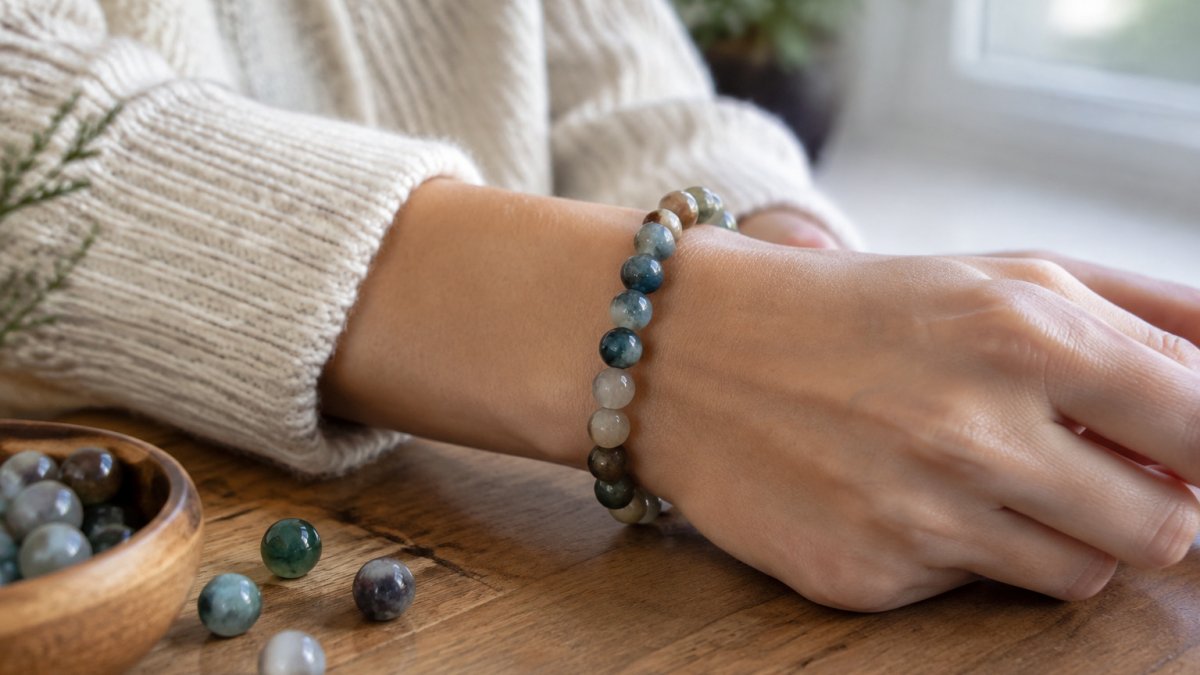
Treatment does not automatically make a bead fake. It does mean the stone is less natural than it looks. Ask whether a stone has been dyed, heated, or stabilized, and look for that disclosure in the product description.
Image placement: a close-up of a woman's wrist wearing a beaded stone bracelet in soft natural window light.
Durability and Wear: Natural Stone vs Synthetic Beads
Durability depends more on the specific material than on the category. Natural stones vary widely in hardness. Quartz-based stones resist scratching better than softer minerals. Porous stones can stain or dull with oils and lotions. Synthetic glass can chip if dropped, while plastic beads can scratch and fade over time.
For everyday wear, natural stone usually holds its appearance well if cared for. Synthetic beads may look fine at first but show surface wear sooner, particularly with frequent contact with water, sunscreen, or hand creams.
Natural Stone Bracelet Care by Material
Care depends on the stone. Most natural stone bracelets benefit from these basic habits:
- Wipe with a soft, dry cloth after wearing.
- Remove the bracelet before showering, swimming, or applying lotion or perfume.
- Store it separately so beads do not knock against harder materials.
- Keep it away from prolonged direct sunlight, since some stones fade.
Some stones need extra caution. Amethyst can fade in strong, prolonged sun. Glass-based beads should not be knocked against stone or tile. Avoid harsh household chemicals on any bracelet. Find safe cleaning methods suited to delicate natural stone.
Price, Value and Daily Comfort Compared
Price in beaded bracelets is driven by a handful of factors, and understanding them is more useful than assuming a low price means imitation or a high price means quality. Use this checklist to judge whether a crystal piece is worth its price.
What moves the price:
- Stone type. Rarer minerals and stones with stronger color or clarity command more than abundant ones. A strand of common quartz-based beads and a strand of a rare, vividly colored stone can differ many times over at the same bead size.
- Bead size and count. Larger beads use more material and usually cost more per bracelet. A bracelet of 10 mm beads carries noticeably more stone than one of 6 mm beads.
- Treatments. Dyed, heated, and stabilized stones are common and often affordable. Untreated stone in a strong color is scarcer and typically priced higher. Treatment is not a defect, but it should be disclosed.
- Workmanship. Hand-knotted strands, secure elastic, quality clasps, and consistent bead sizing add labor and cost. Learn what drives handcrafted pricing. A stretch bracelet and an adjustable clasp bracelet solve the same problem in different ways and at different price points.
- Disclosure and documentation. Sellers who state material, treatment, and origin clearly carry more accountability, and that is part of what you pay for.
A low price is not proof of imitation, and a high price is not proof of quality. The useful question is whether the price is consistent with the disclosed material, size, and construction.
A practical way to compare value: ask what the bracelet is made of, how large the beads are, whether the stones are treated, and how the bracelet is strung or fastened.
Comfort and everyday wear:
- Weight. Natural stone bracelets are often heavier than glass or plastic. Some people prefer that heft; others find it tiring over a long day. If you wear a keyboard or work with your hands, a lighter strand may be more comfortable.
- Bead consistency. Uniform beads sit more smoothly against the skin. Natural stone varies slightly in size and shape, which most wearers find comfortable but which can create small pressure points on a tight strand.
- Construction. Stretch bracelets feel softer and need no clasp, but the elastic is the wear point and should be inspected periodically. Adjustable bracelets with a chain or clasp offer a more secure fit across wrist sizes and are easier to put on and take off.
- Skin contact. Most people wear stone, glass, and plastic beads without issue. Metal findings are the more common source of skin sensitivity, so if you have reacted to jewelry before, check the clasp and spacer metals rather than the beads. Nickel is a common culprit in base-metal findings; stainless steel and sterling silver are common alternatives.
For daily wear, match the bracelet to your routine. A stretch strand of durable stone suits frequent wear if you remove it for showers, swimming, and lotion. A clasp bracelet with mixed materials suits people who want a more secure fit and adjust it through the day.
Choosing the Right Bracelet and Shopping at GCDJewelry
Start by deciding what matters most: material authenticity, appearance, budget, or daily durability. If you want natural material and a handcrafted finish, our Opalite Beaded Bracelet and Blue Goldstone & Amethyst Bracelet are good places to start. If you prefer lighter pieces for everyday wear, our dangle earrings may suit you better.
Before you buy, read the material description, ask about any treatments, and check the care guidance.
Shop the GCDJewelry collection today and find a handcrafted piece that fits your style and everyday routine.
Frequently Asked Questions
What is the difference between natural stone and synthetic beads?
Natural stone beads are cut from mineral material formed in the earth, so each bead carries its own grain, inclusions and colour variation. Synthetic beads are made from glass, resin or plastic, or from lab-created stone, and they are usually more uniform in colour and shape. Neither is automatically better. Natural stone tends to cost more and needs more gentle care, while synthetic beads are lighter, cheaper and easier to match across a set. Check the product listing to see which material a bracelet uses before you buy.
Are synthetic beads the same as fake gemstones?
Not always. A lab-created stone has the same chemical and crystal structure as a natural stone but was grown in a lab. A glass or plastic bead is an imitation that copies the look without the stone's composition. The label should say which one you are buying. Blue goldstone, for example, is man-made glass with metallic sparkle, not a natural crystal, and the GCDJewelry listing states this plainly.
How can you tell if a stone bracelet is natural or synthetic?
Look for natural variation: irregular veining, small inclusions and slight differences from bead to bead. Feel for temperature and weight, since natural stone often feels cool and denser than glass or plastic. Home tests have limits, though. Scratch tests can damage the stone, and a glass bead can pass a quick look. When the material matters to you, ask the seller for a written description of each stone and buy from a seller who lists materials clearly.
Are natural stone bracelets more durable than synthetic bead bracelets?
Natural stone is generally harder than glass or plastic, so it resists scratching better. However, many natural stones can still chip, fade in strong sun or dull with repeated exposure to lotion and perfume. Glass beads can crack if knocked against hard surfaces. Durability depends on the specific stone, the treatment and how you wear it. Store the bracelet separately, keep it away from chemicals and water, and wipe it with a soft dry cloth after wear.