
Table of Contents
- Step 1: Understand What Makes a Handmade Crystal Necklace Different
- Step 2: How to Tell If a Crystal Is Genuine
- Step 3: Explore Raw Crystal Necklaces and Design Styles
- Step 4: Evaluate Handmade Gemstone Jewelry for Quality and Craftsmanship
- Step 5: Check Sizing, Chain Length, and Fit Before Purchasing
- Step 6: Learn Crystal Necklace Care and Durability for Everyday Wear
- Step 7: Verify Seller Credibility and Review Return Policies
- Frequently Asked Questions
Last Updated: October 12, 2026
Step 1: Understand What Makes a Handmade Crystal Necklace Different
When you buy handmade crystal necklaces online, you're choosing something fundamentally different from mass-produced jewelry. Artisans select each stone, design the layout, and assemble the piece with intention, time, and skill that factory production cannot replicate at scale.

At GCDJewelry, we've spent over a decade crafting necklaces that reflect both artistry and authenticity. Each piece begins with sourcing genuine natural gemstones, then progresses through design, beading, and finishing by hand—jewelry that carries the maker's fingerprint, not a machine's consistency.
The difference matters beyond aesthetics. Handcrafted pieces feel more substantial because they use real materials and thoughtful construction, while mass-produced necklaces may use lower-grade or synthetic stones to hit a price point. You're paying for the maker's time and materials, not marketing or inventory overhead.
No two handmade pieces are identical. Natural stone variations, subtle differences in bead placement, and individual finishing touches make each necklace unique, which is the entire appeal for some buyers and a concern for others. Understanding this helps you set realistic expectations.
Step 2: How to Tell If a Crystal Is Genuine
Genuine crystals and natural gemstones have specific visual and physical characteristics that distinguish them from synthetic or treated alternatives. Learning to spot these markers protects you from overpaying for imitations.
Real crystals typically show natural inclusions, color variations, or subtle cloudiness from their formation. Synthetic stones are often too perfect: uniform color, zero inclusions, and a glasslike clarity real gemstones rarely achieve. If a crystal looks flawless under magnification, it's likely lab-created or glass.
Weight and density matter too. Genuine gemstones feel heavier for their size than glass or plastic. A real lapis lazuli necklace has noticeable heft; a fake feels surprisingly light. This is easiest to test in person, though harder to assess through photos.
Color consistency is another clue. Natural stones vary within their color family: a genuine tiger's eye shows bands of golden and darker brown that shift with light, while synthetic versions look uniform and almost painted. Real black onyx has depth; artificial black stone looks flat.
Ask sellers directly about treatment. Many legitimate stones undergo heat treatment or enhancement; this is standard practice, not deceptive, but you should know about it. Reputable makers disclose whether stones are raw, polished, heat-treated, or enhanced. Silence is a warning sign.
Step 3: Explore Raw Crystal Necklaces and Design Styles
Raw crystal necklaces showcase stones in their natural, unpolished state, appealing to buyers who value authenticity and the organic look of unrefined gemstones. The aesthetic is earthy and grounded, less formal than polished jewelry.
Raw crystals often feature irregular shapes, visible striations, and a matte or slightly textured surface. This imperfection is the point. Each raw stone looks different because nature created it that way. When you buy handmade crystal necklaces with raw stones, you're embracing that unpredictability.
Polished and tumbled stones offer a different appeal: smoothed and refined, they suit professional settings or minimalist everyday style. The smooth finish catches light beautifully and feels comfortable against skin.
Beaded necklaces combine multiple stones into a unified design, letting you layer different crystal types and colors.
Pendant necklaces feature a single focal stone or small cluster on a chain, drawing attention to one standout piece, ideal for a particularly beautiful raw crystal or distinctive gemstone. Pendants tend to feel more versatile across outfits and occasions.
Consider your lifestyle when choosing a style. Raw crystals need more careful handling and cleaning; polished stones are more durable for daily wear. Beaded necklaces offer visual complexity; pendants provide simplicity. Choose based on whether you prioritize aesthetic impact, durability, or ease of care.
Step 4: Evaluate Handmade Gemstone Jewelry for Quality and Craftsmanship
Quality handmade gemstone jewelry reveals itself through careful inspection of materials, construction, and finishing. When you buy handmade crystal necklaces online, examine these markers before committing.
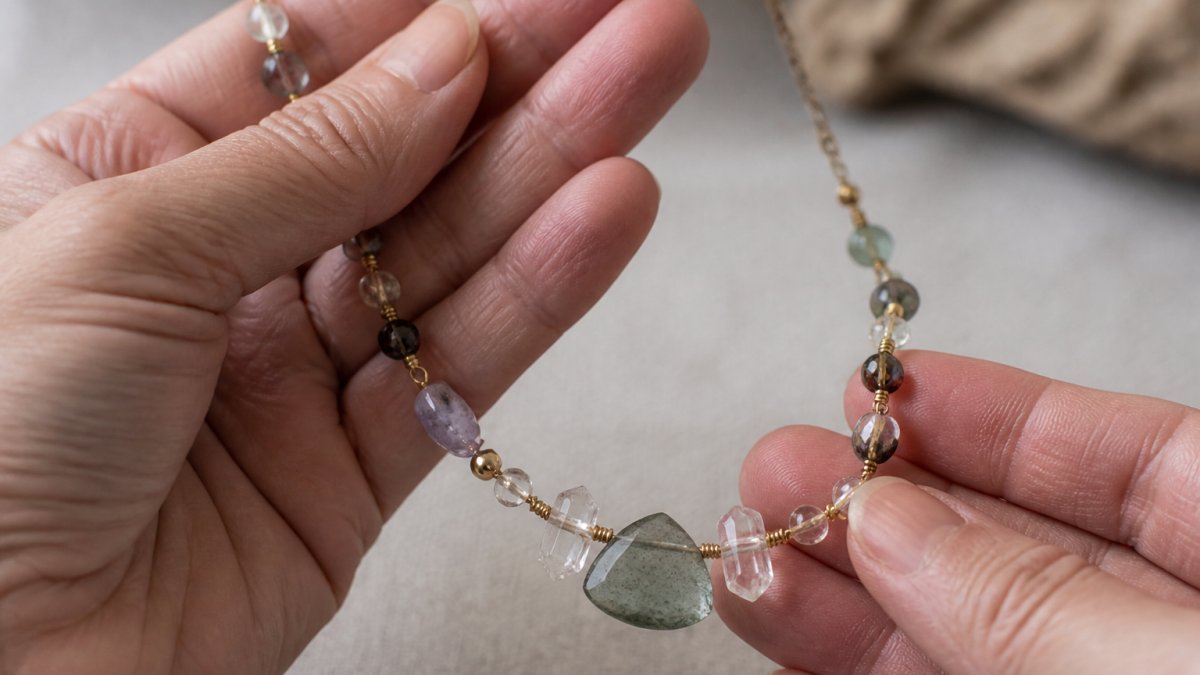
Start with the stones. Slight size variation suggests hand-selection; perfect uniformity suggests industrial sorting. Rough edges on raw stones are normal; uneven, jagged damage is not. Look for chips, cracks, or significant cloudiness that might affect durability.
Examine the stringing material. Quality necklaces use sturdy, non-stretchy materials like beading wire, nylon cord, or genuine chain; cheap elastic degrades and eventually snaps. Ask the maker what they use; transparency indicates confidence in their work.
The knots and connections deserve attention. In a beaded necklace, knots between stones should be tight and even; loose knots let stones shift and rub, causing premature wear. On pendant necklaces, the attachment point should be secure and symmetrical.
Clasps matter more than many buyers realize. A quality clasp feels substantial and operates smoothly; flimsy clasps fail quickly. If a maker skimped on the clasp, they likely skimped elsewhere.
Look at the overall finish: edges should be smooth, not sharp, and beads consistent in color and quality. If you're looking at photos, ask for multiple angles and close-ups. Makers confident in their work welcome scrutiny.
Step 5: Check Sizing, Chain Length, and Fit Before Purchasing
Necklace length dramatically affects how a piece looks and feels. Standard necklace lengths typically range from 16 to 24 inches, but the right length depends on your frame, neckline preferences, and how you plan to layer.
A 16-18 inch necklace sits close to the collarbone, working well for delicate statement pieces you want to showcase. It suits smaller frames and high necklines, and stays visible over a shirt or sweater.
An 18-20 inch necklace hits at the base of the neck, offering a balanced look for most body types.
A 22-24 inch necklace drops further down the chest, creating an elongating effect that flatters larger frames. It works beautifully with open necklines and layered looks, and is less likely to get caught in clothing or under collars.
Stone necklace in lapis lazuli, black onyx and tigers eye, protection, safe →
Many handmade makers offer custom lengths. GCDJewelry's necklaces, for example, come in multiple size options and can be customized to your exact preference, a real advantage of buying handmade, since you're not locked into standard retail sizing.
Before ordering, measure a necklace you already own and like: lay it flat, measure clasp to clasp, and compare to available lengths. If you're between sizes, consider your typical neckline and whether you prefer snug or loose.
Pay attention to the clasp type too. Lobster clasps are secure but bulky; spring ring clasps are smaller but need more dexterity; magnetic clasps are convenient but can accidentally open.
Step 6: Learn Crystal Necklace Care and Durability for Everyday Wear
Handmade crystal necklaces are durable when cared for properly, but they require more attention than mass-produced jewelry. Proper maintenance extends lifespan and preserves appearance.
Natural gemstones are sensitive to water, chemicals, and temperature changes. Remove your necklace before showering, swimming, or exercising; water exposure can dull stones, weaken knots, and corrode metal, and tap water minerals leave residue over time.
Store your necklace flat or loosely coiled in a soft pouch. Hanging long-term can stretch the stringing material and stress connection points. Keep it away from direct sunlight, which can fade some stones and cause temperature fluctuations that stress the structure.
Clean gently and infrequently. A soft, dry cloth removes dust and light dirt. For deeper cleaning, use lukewarm distilled water and a soft brush, but only if the maker confirms all stones can withstand water.
Avoid lotions, perfumes, and harsh chemicals, which coat stones, dull their appearance, and degrade stringing materials. Put on your necklace after applying skincare products and remove it before bed.
Beaded necklaces are generally more durable than pendants because weight is distributed across multiple stones rather than concentrated on one connection point. Still, any necklace can break if snagged or dropped, so handle with care during active pursuits.

Check your necklace regularly for wear. Loose knots, fraying cord, or weakened clasps are repair opportunities, not death sentences; many artisans offer repair services. Addressing small issues early prevents catastrophic failure.
Step 7: Verify Seller Credibility and Review Return Policies
Buying handmade crystal necklaces online carries inherent risk because you can't inspect the piece in person. Minimizing that risk requires careful seller evaluation.
Start by checking how long the maker has been in business. Established artisans with years of track record are lower-risk than brand-new sellers.
Read customer reviews carefully. Look for specifics like "The beads are exactly as shown" or "The clasp is sturdy"; vague praise ("Great seller!") is less informative.
Check the return and refund policy before purchasing. A credible maker stands behind their work and offers returns within a reasonable window, typically 14-30 days.
Ask questions before buying, about materials, sizing, customization, or care. How quickly and thoroughly does the seller respond?
Verify that the maker actually creates the pieces they sell; some online sellers source factory inventory and rebrand it as handmade. Ask about their process: Where do they source materials?
Look for certifications or memberships that signal legitimacy. Some platforms (like Etsy) verify handmade claims. Some makers belong to artisan associations or have been featured in publications. These credentials aren't essential, but they add confidence.
Check shipping practices. Does the seller offer tracking and package carefully to prevent damage?
Buying handmade crystal necklaces online requires intentionality, but the reward is jewelry reflecting genuine artistry and personal connection. Understand what you're purchasing: a one-of-a-kind piece made by a real person, not a factory product.
GCDJewelry offers handcrafted crystal necklaces designed for everyday wear and meaningful gift-giving. Whether you're drawn to protective stones like black onyx and hematite, we create necklaces that help you look and feel your best. Shop our collection and discover the difference handmade craftsmanship makes.
Frequently Asked Questions
How can you tell if a crystal necklace is handmade?
Handmade crystal necklaces show visible signs of artisan work: slight variations in bead size, irregular knots in the stringing, and unique spacing between stones. Check the seller's description for mention of handcrafted production and look for photos showing the maker's hands or workshop. Authentic artisans often display their process and offer customization options. GCDJewelry pieces, for example, are handcrafted in Ontario and each necklace varies slightly due to natural stone differences and handmade construction.
How can you tell whether a crystal necklace uses a genuine gemstone?
Genuine gemstones have natural variations in color, opacity, and tone that mass-produced synthetic stones lack. Request close-up photos from multiple angles and ask the seller whether stones are natural, treated, or synthetic. Real crystals feel cool to the touch and have consistent weight. Reputable sellers provide stone names and origins. Avoid listings with suspiciously uniform appearance or vague descriptions like 'crystal-colored.' GCDJewelry uses natural stones and lists specific stone types, such as black onyx, lapis lazuli, and tiger's eye, so you know exactly what you're purchasing.
What should you look for when buying a handmade crystal necklace online?
Prioritize seller transparency: clear photos, detailed stone descriptions, available lengths, and honest return policies. Verify the maker's credentials and location. Check for customer reviews mentioning durability and accuracy to photos. Confirm whether stones are natural and whether the necklace suits daily wear. Look for sellers who offer customization and explain their handmade process. GCDJewelry necklaces are available for $65, $67, $68, or $69, include multiple stone types, and are available in multiple lengths (18-24 inches) so you can find the right fit.
How should you care for a handmade crystal necklace?
Wipe your necklace with a soft, dry cloth after wearing to remove oils and dust. Avoid water, sweat, and harsh cleaners, especially if your stones include hematite or metallic finishes. Store flat or in a pouch to prevent beads from rubbing against other jewelry. Remove the necklace before showering, swimming, or exercising if it contains delicate stones. For beaded necklaces, check the stringing occasionally for wear. Proper care extends the life of your handmade necklace significantly, ensuring it remains beautiful for years of everyday wear.