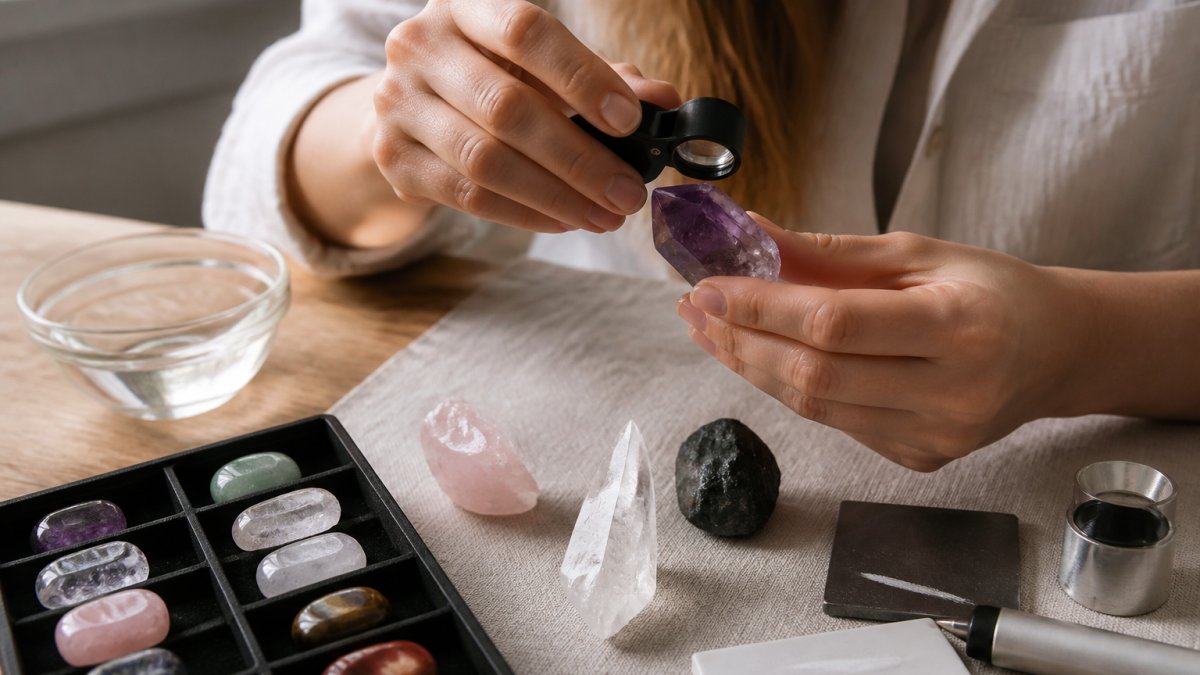

Table of Contents
- Why Verifying Handmade Crystal Jewelry Matters
- How to Tell If Crystals Are Real: Visual and Physical Tests
- Identifying Natural Gemstones vs Glass: Key Differences
- Signs of Handmade Jewelry Quality: Craftsmanship and Metal Assessment
- Using a Jeweler's Loupe for Detailed Inspection
- UV Light Testing and Advanced Verification Methods
- Verifying Provenance and Ethical Sourcing
- Conclusion: Confident Handmade Crystal Jewelry Purchases
- Frequently Asked Questions
Last Updated: October 4, 2026
Why Verifying Handmade Crystal Jewelry Matters
Authenticity matters when shopping for handmade crystal jewelry. Counterfeit crystals flood the market, and knowing how to verify handmade crystal jewelry protects both your investment and your peace of mind.
The difference between real and fake becomes clear once you know what to look for.
This guide teaches you physical tests, visual inspection techniques, and craftsmanship assessment to spot authentic pieces and avoid costly mistakes.
How to Tell If Crystals Are Real: Visual and Physical Tests
Several simple tests reveal whether you have real crystals or glass imitations. The key is understanding what separates natural gemstones from synthetic crystal and cheap glass.
The Glass Scratch Test
Real crystals are harder than glass. Gently try to scratch the crystal with a glass edge; if the glass scratches the crystal, you have glass, not a real stone. Test rough surfaces gently to avoid damaging the piece.
Checking for Natural Inclusions and Imperfections
Real gemstones contain imperfections, bubbles, color variations, cracks, cloudiness, or striations, that prove authenticity. Glass bubbles appear rounded and smooth; natural inclusions look irregular. Synthetic crystals may have fewer inclusions than natural stones but still show internal structure. Mass-produced glass has artificial clarity.
Temperature and Thermal Conductivity Tests
Hold the stone against your cheek; real crystals feel cold longer than glass because they have higher thermal conductivity. Glass warms quickly to match your skin temperature. You can also place the stone in room-temperature water; real crystals maintain the water's temperature longer than glass.
Identifying Natural Gemstones vs Glass: Key Differences
The line between natural gemstones and glass imitations matters. Understanding the optical properties that separate them helps you verify handmade crystal jewelry with confidence.
Refractive Index and Optical Clarity
Natural crystals bend light distinctly, creating color saturation and depth that glass cannot replicate.
Weight and Density Indicators
Real gemstones weigh more than glass for the same size. Hold two similar-sized stones side by side; the real gemstone feels noticeably heavier. If buying online, ask the seller for weight information; genuine handmade crystal jewelry sellers provide these details.
Signs of Handmade Jewelry Quality: Craftsmanship and Metal Assessment
Handmade jewelry shows evidence of human creation. Mass-produced pieces have a uniformity that handcrafted work lacks. Learning to spot quality craftsmanship separates artisan pieces from factory-made imitations.
Evaluating Wire-Wrapping Integrity
Quality wire-wrapping shows consistent tension, neat organized wraps, symmetrical positioning, and smooth transitions with no sharp edges. Poor wrapping shows loose coils, uneven tension, and awkward crossing. Examine wraps under a jeweler's loupe to see whether the artisan created precise, intentional work or rushed finishing.
Hallmarks and Metal Purity
Genuine metal components carry hallmarks (925 for sterling silver, 14K or 18K for gold, maker's marks, or country stamps). A piece without hallmarks may contain plated or fake metal. GCDJewelry provides clear information about metal components; handmade artisans take pride in quality metals.
Bezel and Prong Setting Quality
Quality bezel and prong settings show smooth metal contact, no gaps, secure immobile stones, symmetrical prongs, and no rough edges. A stone that moves or rattles signals poor work. Run your finger around the stone's edge; you should feel smooth metal, not sharp points or gaps.
Using a Jeweler's Loupe for Detailed Inspection
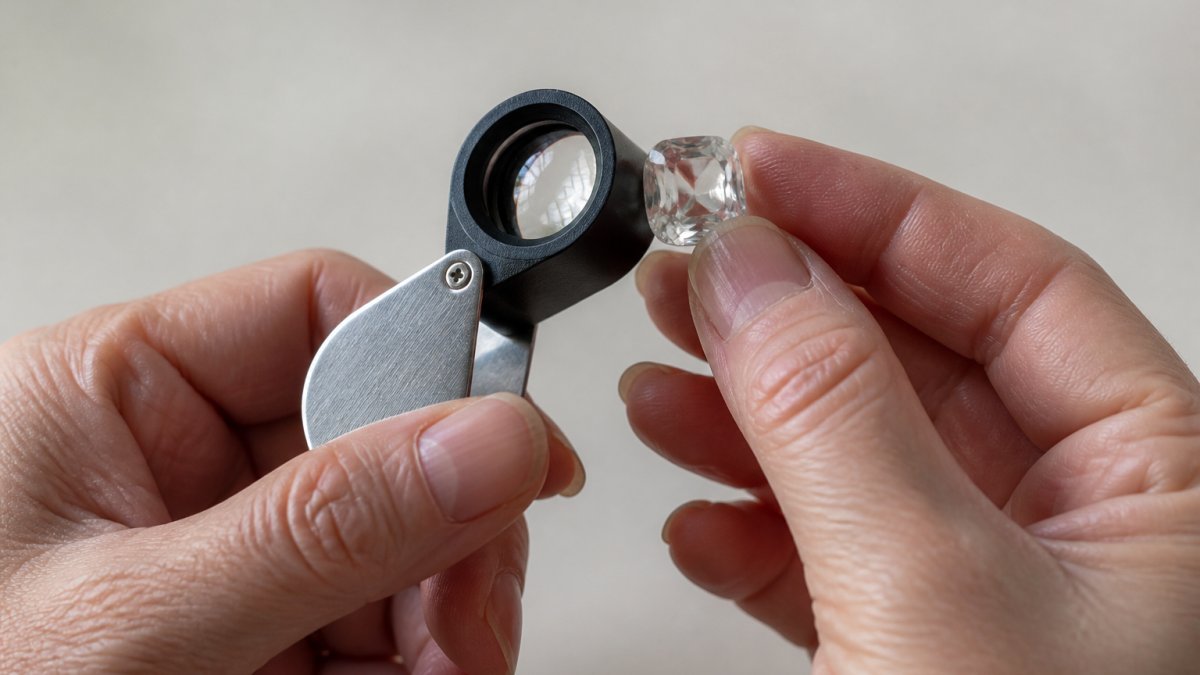
A jeweler's loupe (typically 10x magnification) is an inexpensive tool that reveals details invisible to the naked eye.
How to Use a Loupe Correctly
Hold the loupe close to your eye and position the stone between your eye and a light source (natural daylight works best). Move the stone slowly, tilting it to catch light at different angles; inclusions reveal themselves under directional light. Avoid harsh fluorescent lights; use natural daylight or a small LED loupe light.
What to Look for Under Magnification
Look for natural inclusions (feathering, needles, three-phase cavities, color zoning, cloudiness) that prove authenticity. Glass shows perfectly uniform clarity, rounded bubbles, swirl patterns, or suspiciously perfect color. For metalwork, check consistent wire tension, smooth solder joints, clean wire surfaces, symmetrical prongs, and no rough edges. Genuine hallmarks are crisp and readable; fakes are shallow or blurry.
Loupe Inspection Workflow
Inspect the stone interior for inclusions and color zoning, examine the setting and metalwork for precision, look for hallmarks, and check for damage. Genuine craftsmanship shows precision and intention, while rushed or counterfeit work reveals itself immediately.
Smartphone Macro Lenses as a Supplement
If you prefer digital documentation, smartphone macro lenses (clip-on or built-in) can supplement loupe inspection. They allow you to photograph details and compare them against reference images online. Use them to document your findings, not as your primary inspection tool.
UV Light Testing and Advanced Verification Methods
Ultraviolet light reveals properties hidden by visible light. Some crystals fluoresce under UV light; others remain inert. This variation helps identify genuine stones, distinguish natural from synthetic specimens, and spot glass imitations.
How UV Fluorescence Works in Crystals
Fluorescence occurs when a material absorbs UV photons and re-emits visible light. The color and intensity depend on trace elements and crystal structure. Natural amethyst often glows under UV light due to iron impurities; lab-created amethyst may fluoresce differently. Understanding expected responses for your stone type is key to effective UV testing.
UV Light Types and What They Reveal
Long-wave UV (365 nm) penetrates deeper and produces stronger fluorescence; short-wave UV (254 nm) is more energetic but has weaker penetration. For most handmade jewelry verification, a long-wave UV light is sufficient.
Stone-Specific Fluorescence Reference
Natural amethyst often glows violet, blue, or pink under long-wave UV; lab-created amethyst shows weak or no response. Citrine is typically inert. Rose quartz is usually inert; strong glow suggests it's not genuine. Fluorite often glows blue, purple, or red. Clear quartz is usually inert; glow suggests contamination or synthetic origin. Glass imitations show no fluorescence.
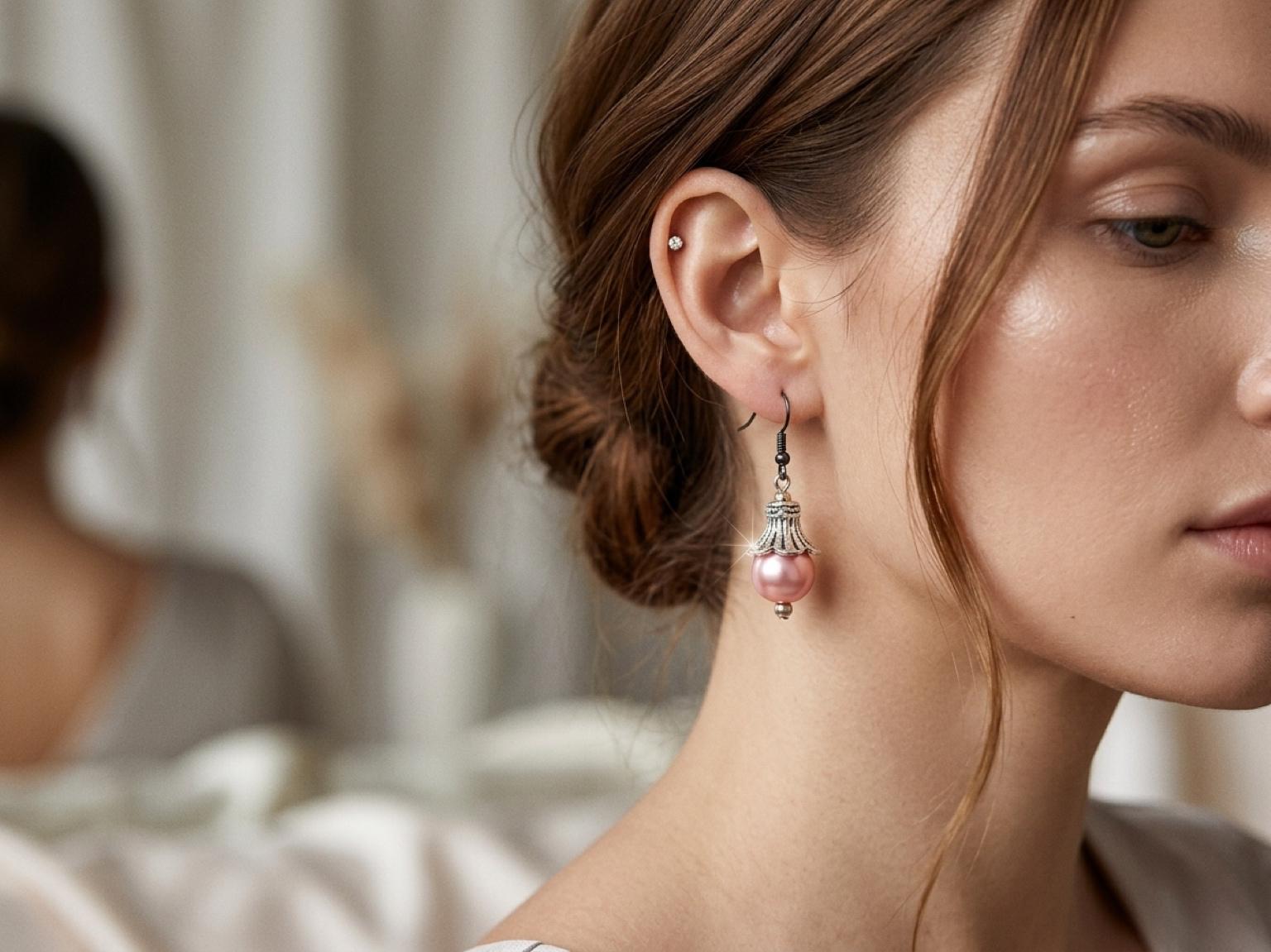
Green Aventurine & Rose Lampwork Glass Dangle Earrings | Handmade Lucky Stone →
How to Conduct a UV Test
Setup:
- Obtain a long-wave UV light (365 nm)
- Use the light in a dark room or dark environment (daylight will overwhelm the fluorescence)
- Allow your eyes 30 seconds to adjust to darkness
- Position the stone approximately 10-25 cm from the UV light source
Observation:
- Note the color and intensity of any glow
- Rotate the stone to see if fluorescence is uniform or localized
- Observe for 10-15 seconds; some stones take time to reach full brightness
- Compare your observation to the reference data for your stone type
- If possible, test a known genuine specimen of the same stone for comparison
Interpretation:
- If the stone fluoresces in the expected color and intensity, this supports authenticity
- If it shows no fluorescence when it should, or unexpected colors, it may be synthetic, treated, or fake
- Absence of fluorescence alone is not proof of fakery (some natural stones are inert)
- Unexpected strong fluorescence suggests synthetic origin or glass imitation
Limitations and Caveats
UV testing is a screening tool, not a definitive proof. Several factors can complicate interpretation:
Natural variation:
- Two natural amethysts from different sources may fluoresce differently
- Trace elements vary by geographic origin, affecting fluorescence intensity
- Age and exposure to light can alter fluorescence over time
Treatments:
- Heat-treated stones may show altered fluorescence compared to untreated specimens
- Irradiation (used to enhance color in some stones) changes fluorescence
- Coatings or surface treatments can suppress or alter glow
Synthetic complexity:
- Lab-created stones can be engineered to fluoresce like natural specimens
- Some synthetic stones fluoresce more strongly than natural equivalents
- High-quality synthetic stones are increasingly difficult to distinguish by fluorescence alone
Combining UV Testing with Other Methods
UV testing works best as part of a comprehensive verification approach. Use it alongside:
- Loupe inspection for inclusions and internal structure
- Thermal conductivity tests (real crystals stay cool longer)
- Weight and density assessment
- Visual inspection for color saturation and clarity
For handmade jewelry purchases, ask the seller whether the stone has been treated or is synthetic. If they cannot or will not answer, UV testing combined with loupe inspection gives you the data to make an informed decision.
Verifying Provenance and Ethical Sourcing
Knowing where a crystal came from matters. Ethical sourcing means the stone was extracted responsibly. The artisan who crafted it used fair labor practices.
Questions to ask the seller:
- Where did the stone originate?
- Can they provide documentation of the source?
- Is the metal ethically sourced?
- Does the artisan follow fair labor practices?
- Are there any certifications or third-party verifications?
Handmade jewelry sellers who care about their craft provide this information willingly. They're proud of their sourcing choices. They document their materials and processes because transparency builds customer trust.
When you buy from GCDJewelry, you're supporting Canadian artisans. Each piece is handcrafted in Ontario with natural gemstones selected for quality. The commitment to handmade work means every piece receives individual attention and care.
Documentation might include:
- Information about stone origin
- Details about the artisan or maker
- Care instructions specific to your stone
Conclusion: Confident Handmade Crystal Jewelry Purchases
Verifying handmade crystal jewelry protects your investment and ensures you're buying authentic pieces. The tests in this guide, scratch tests, thermal conductivity checks, loupe inspection, and UV testing, work together to confirm authenticity.
Real craftsmanship shows in every detail. Quality wire-wrapping, proper hallmarks, secure settings, and thoughtful design all signal that an artisan invested time and skill in creating your piece. When you know what to look for, you can spot these qualities immediately.
GCDJewelry's handcrafted collection features genuine gemstones set in quality metals by skilled artisans. Each piece is created with intention and care. Our Green Aventurine & Rose Lampwork Glass Dangle Earrings showcase the kind of craftsmanship and material quality that makes handmade jewelry worth buying. Explore our collection and find pieces that resonate with your style and values.

Frequently Asked Questions
How can you tell if a crystal is real or glass?
Real crystals have natural inclusions, consistent weight distribution, and specific thermal properties. Glass imitations feel lighter, have uniform clarity, and warm quickly in your hand. The glass scratch test helps: real gemstones resist scratching from standard glass, while glass imitations scratch easily. Check for hallmarks and ask for provenance documentation when purchasing.
What are the signs of high-quality handmade jewelry?
Quality handmade jewelry shows consistent wire-wrapping with no loose ends, clean solder joints, and secure stone settings. Look for hallmarks indicating metal purity (like sterling silver stamps). Artisan pieces display visible craftsmanship variation; no two items are identical. Metal findings should feel substantial, not flimsy. Bezel and prong settings hold stones firmly without wobbling. Handcrafted earrings like GCDJewelry's Amethyst & White Dolomite Cluster Drop Earrings feature matched pairs with natural stone variation, indicating authentic artisan creation rather than mass production.
Do natural crystals have imperfections?
Yes, natural crystals always have inclusions and imperfections. These are proof of authenticity. Inclusions might appear as tiny air bubbles, color variations, or internal fracture lines. Perfect, flawless stones are typically lab-grown or synthetic. A jeweler's loupe reveals these natural characteristics clearly. Handmade jewelry creators often highlight these unique features as markers of genuine materials; each piece's imperfections make it one-of-a-kind.
What should I look for when buying artisan crystal jewelry?
Request documentation of the creator's location and materials used. Authentic artisans provide stone type, metal composition, and care instructions. Examine photos closely for wire-wrapping quality and consistent metalwork. Ask about ethical sourcing practices and whether stones are natural or lab-grown. Check for hallmarks and ask about the artisan's experience. Handmade pieces from established makers like GCDJewelry, created in Ontario since 2012, offer verifiable craftsmanship history. Look for minor variations between pieces; uniformity suggests mass production, not handcrafting.
Buying handmade crystal jewelry means investing in pieces that last. Authentic stones, quality metals, and skilled craftsmanship combine to create jewelry you'll wear for years. Trust the verification methods in this guide, ask sellers the right questions, and choose artisans who stand behind their work. When you shop with GCDJewelry, you're supporting Canadian handcrafted excellence and bringing authentic, meaningful pieces into your life.