
Table of Contents
- The Story Behind Handmade Crystal Jewelry
- Benefits of Natural Crystal Jewelry for Daily Wear
- Craftsmanship vs. Mass Production
- How to Identify High-Quality Handmade Jewelry
- Sustainability and Ethical Sourcing
- Caring for Handmade Crystal Accessories
- The Investment Value of Artisan Pieces
- Frequently Asked Questions
Last Updated: September 25, 2026
The Story Behind Handmade Crystal Jewelry
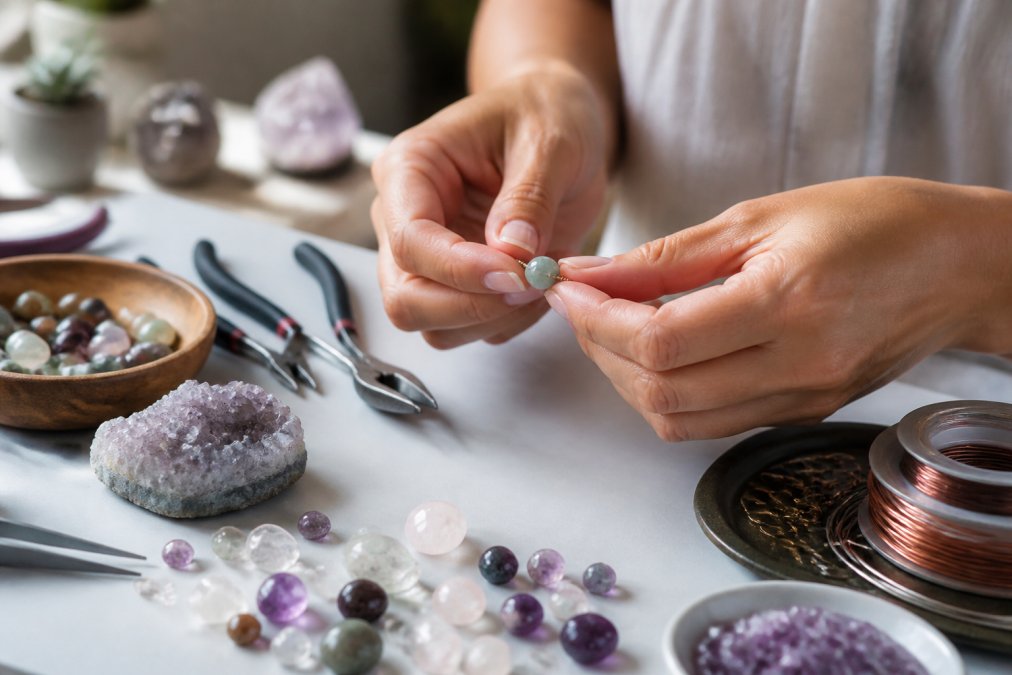
Handmade crystal jewelry is fundamentally different from mass-produced pieces. When you wear a piece created by hand, you're wearing something shaped by intention, not machinery. Each bead is selected, each wire is bent, each connection is secured by someone who understands the stone they're working with.
At GCDJewelry, we've been crafting handmade crystal jewelry since 2012. Artisans don't just assemble components, they make decisions about which stones complement each other, how weight balances on your wrist, and whether a crystal's energy aligns with the piece's purpose.
A handcrafted bracelet shows the maker's touch: slight variations in bead spacing, wire wrapping technique, and design choices. These aren't flaws, they're signatures. Mass-produced jewelry aims for uniformity; artisan work celebrates the uniqueness of natural materials and human skill.
When you know someone spent hours selecting and assembling your piece, the jewelry becomes more than decoration, a tangible connection between maker and wearer in a world of disposable fashion.
Benefits of Natural Crystal Jewelry for Daily Wear
Natural crystals have been valued across cultures for centuries. The appeal goes beyond aesthetics to include the tactile experience and symbolic weight of wearing a genuine stone, including energetic properties attributed to different crystals.
Physical Durability and Longevity
Natural gemstones like rose quartz, aventurine, and jasper are durable enough to withstand daily contact with skin, clothing, and minor impacts. Pieces like the Rose Quartz Heart Pendant are designed for everyday wear.

Each natural stone has its own character, the soft pink of rose quartz, the speckled warmth of autumn jasper, the calm green of aventurine. These colors remain true because they're inherent to the mineral, not applied as a coating.
The Energetic and Symbolic Properties of Crystals
What distinguishes crystal jewelry is the intentional pairing of handmade craftsmanship with metaphysical properties attributed to specific stones. While scientific evidence for crystal healing is limited, the practice is rooted in traditional medicine systems across cultures, and many wearers report meaningful personal experiences with crystal energy.
Common crystal associations include:
- Rose Quartz: Associated with compassion, self-love, and emotional healing. Many wearers choose rose quartz pieces during periods of emotional transition or as a daily reminder to practice self-care.
- Aventurine: Linked to opportunity, abundance, and calm. Often worn by those seeking clarity in decision-making or a sense of grounding.
- Jasper (various types): Different jasper varieties carry different associations, ocean jasper for tranquility, red jasper for vitality and grounding, autumn jasper for balance and stability.
- Amethyst: Traditionally associated with clarity, spiritual awareness, and stress relief.
When a handmade piece is created with intention, the wearer's connection deepens. An artisan who understands crystal properties can intentionally pair stones that complement each other energetically, creating a piece that works on both aesthetic and symbolic levels, rarely possible in mass production, where stone selection is driven by cost and availability.
Tactile and Sensory Experience
The weight and temperature of a genuine stone feel different than plastic or resin, contributing to why people develop genuine attachments to their pieces. For those who work with crystal energy, this tactile presence serves as a consistent reminder of the intention set when the piece was chosen.
Craftsmanship vs. Mass Production
The difference between handmade and mass-produced jewelry comes down to decision-making at every stage. This is where understanding craftsmanship becomes essential to making a smart purchase.
Hand-Finished Details That Last
When an artisan wraps wire around a bead, they consider tension, tight enough to hold securely but not so tight it stresses the stone.
An artisan examines each stone for internal fractures, weak points, and color consistency before inclusion.
Hand-polishing takes time because artisans can feel where the stone needs attention and adjust accordingly.
Precision in Every Bead
Quality handmade work achieves consistency without uniformity, every bead is secure and every connection sound, yet no two pieces are identical because natural stones vary.
This requires skill: understanding how different stone hardnesses respond to wire wrapping, which stones are brittle, and when a bead's internal structure makes it unsuitable for a design.
How to Identify High-Quality Handmade Jewelry
Knowing what separates genuine artisan work from imitation is essential before you invest. There are specific markers that reveal quality.
Spotting Authentic Gemstones
Real stones are never perfectly uniform in color, you'll see subtle shifts in shade, small inclusions, and natural patterns. If a stone looks identical to its neighbors, it's likely synthetic or heavily treated.
The second indicator is weight. Natural gemstones are denser than glass or plastic. A genuine crystal bracelet will feel substantial in your hand. Synthetic alternatives feel lighter, almost hollow by comparison.
Natural stones catch light in specific ways based on crystal structure. Rose quartz has a soft, milky quality; aventurine shows a subtle shimmer from mica inclusions; ocean jasper displays unique orbicular patterns. These optical properties are signatures of authenticity.
Green Aventurine & Rose Lampwork Glass →
Ask the maker for close-up photos of stones from multiple angles. Authentic artisans provide these because they're proud of their material selection. If a seller refuses detailed photos, that's a red flag.
Verifying Artisan Production
Genuine handmade jewelry leaves traces of its creation process: wire wrapping shows slight human variations, bead spacing may vary by a millimeter or two, and clasps may use techniques different from industrial fastening.
Ask the maker directly about their process: How long does a piece take? What tools do they use? Where do they source stones? A true artisan answers specifically because they understand their materials from daily work.
Check for maker attribution. GCDJewelry pieces are created in Ontario, Canada, documented on each product. If a seller claims handmade production but won't specify where or by whom, the claim is questionable.
Sustainability and Ethical Sourcing
Choosing handmade crystal jewelry is often a choice for sustainability by default. Artisan production uses less energy than factory manufacturing. Small batches mean less waste. But the sustainability story runs deeper.
Artisan makers typically source from established suppliers.
The Green Aventurine & Rose Lampwork Glass Dangle Earrings exemplify this approach, rose lampwork beads were repurposed from a broken bracelet, giving the piece a second life. This intentional material reuse is common in artisan studios and rare in mass production.

Handmade jewelry also avoids the environmental impact of fast fashion. Because pieces are selected for personal meaning, they're worn longer and replaced less frequently. A piece you've chosen carefully and invested in emotionally becomes an heirloom rather than a disposable trend.
Caring for Handmade Crystal Accessories
Proper care extends the life of your piece and preserves its physical integrity and vibrational quality. Some principles apply universally.
Physical Maintenance and Storage
Avoid prolonged water exposure, which can weaken wire connections and compromise adhesives. Remove jewelry before showering or swimming.
Store pieces separately in a soft pouch or compartmented box to prevent scratching. Keep away from direct heat and extreme temperature changes, which stress stones and weaken connections.
Clean gently with a soft, dry cloth after wearing. Avoid harsh chemicals, abrasive cleaners, and ultrasonic cleaners.
Crystal-Specific Care and Cleansing
For those who work with crystal energy, periodic cleansing is considered important for maintaining energetic properties.
Common cleansing methods include:
- Moonlight Cleansing: Place your piece in direct moonlight overnight, ideally during a full moon. This is considered gentle and suitable for all crystal types.
- Sunlight Cleansing: Brief exposure to morning sunlight (15-30 minutes) can cleanse and energize crystals. However, some stones fade with prolonged sun exposure (notably amethyst and rose quartz), so this method is best used sparingly and with awareness of your specific stone.
- Sound Cleansing: Using a singing bowl, tuning fork, or even playing specific frequencies is believed to clear stagnant energy. This method doesn't involve water or heat.
- Smoke Cleansing: Passing your piece through the smoke of sage, palo santo, or incense is a traditional method. Ensure the stone doesn't get too hot and that you're using sustainably sourced materials.
- Salt or Salt Water: While popular, salt can be abrasive to certain stones and may damage wire or settings. If using this method, use sea salt sparingly and avoid direct contact with delicate stones.
Stones to avoid water-based cleansing: Some crystals are water-soluble or sensitive to moisture. Selenite, for example, can dissolve in water. Malachite and azurite can be damaged by prolonged water exposure. Always research your specific stone before using water-based methods.
Seasonal and Intentional Recharging
Many practitioners recommend recharging crystals with intention periodically, holding the piece and visualizing its purpose renewed, or placing it on a windowsill during significant lunar phases. This practice reinforces your personal connection to the jewelry.
The Investment Value of Artisan Pieces
Here's what separates handmade crystal jewelry from disposable accessories: it holds value. Not always monetary value, but practical and emotional value that justifies the investment.
Frequently Asked Questions
What are the main benefits of wearing handmade crystal jewelry?
Handmade crystal jewelry offers both aesthetic and personal benefits. Each piece is crafted with intention, using genuine natural gemstones selected for their beauty and traditional associations. Unlike mass-produced alternatives, artisan pieces feature unique designs and superior craftsmanship that ensures durability for everyday wear. Many wearers appreciate the personal connection to the maker and the knowledge that their purchase supports independent artisans creating thoughtful, one-of-a-kind designs.
How can you tell if crystal jewelry is authentic and handmade?
Authentic handmade crystal jewelry shows visible signs of individual craftsmanship: slightly irregular bead spacing, hand-finished wire work, and natural variations in stone color and pattern. Genuine gemstones feel substantial and cool to the touch. Look for makers who openly share their process, offer transparency about materials, and can verify where their pieces are created.
Why is handmade crystal jewelry more sustainable than mass-produced options?
Handmade jewelry production generates far less waste than industrial manufacturing. Artisans often repurpose materials, use ethical sourcing practices, and create durable pieces. Supporting independent makers also encourages sustainable practices.
How should you care for handmade crystal jewelry to keep it looking new?
Proper care extends the life of your handmade pieces significantly. Wipe crystals gently with a soft, dry cloth after wearing to remove oils and dust. Avoid prolonged water exposure, harsh chemicals, perfume, and lotions, which can damage both stone and metal components. Store pieces separately in a pouch or soft cloth to prevent scratching and tangling. Handle carefully to avoid knocking stones against hard surfaces. Regular gentle maintenance preserves the aesthetic beauty that makes each piece special.