
Quick Summary
Natural gemstone jewelry gives everyday wearers a piece with real, unrepeatable character, since each stone carries its own color and patterning so no two pieces look exactly alike. It also pairs easily with many outfits, and many wearers value the personal and cultural meaning a stone can hold. Its health benefits are not medically proven.
- Each natural stone has its own color and patterning, so no two pieces look exactly alike.
- A single well-chosen bracelet or pair of earrings can anchor an entire look.
- Gemstone meanings like calm or confidence are cultural and personal, not medical treatments.
- Wearing a piece you associate with calm can shape your behavior, a placebo-like effect.
- Ask sellers to name the exact stone and whether it has been treated or dyed.
Table of Contents
- What Natural Gemstone Jewelry Offers Everyday Wearers
- Healing Gemstones and Their Meanings
- Crystal Healing Science and Evidence: Separating Belief From Proof
- How to Identify Natural Gemstones, Treated Stones and Imitations
- Choosing Gemstone Jewelry for Your Style, Work Life and Gifts
- How to Care for Natural Gemstone Jewelry So It Lasts
- Choose Your Next Piece at GCDJewelry
- Frequently Asked Questions
What Natural Gemstone Jewelry Offers Everyday Wearers
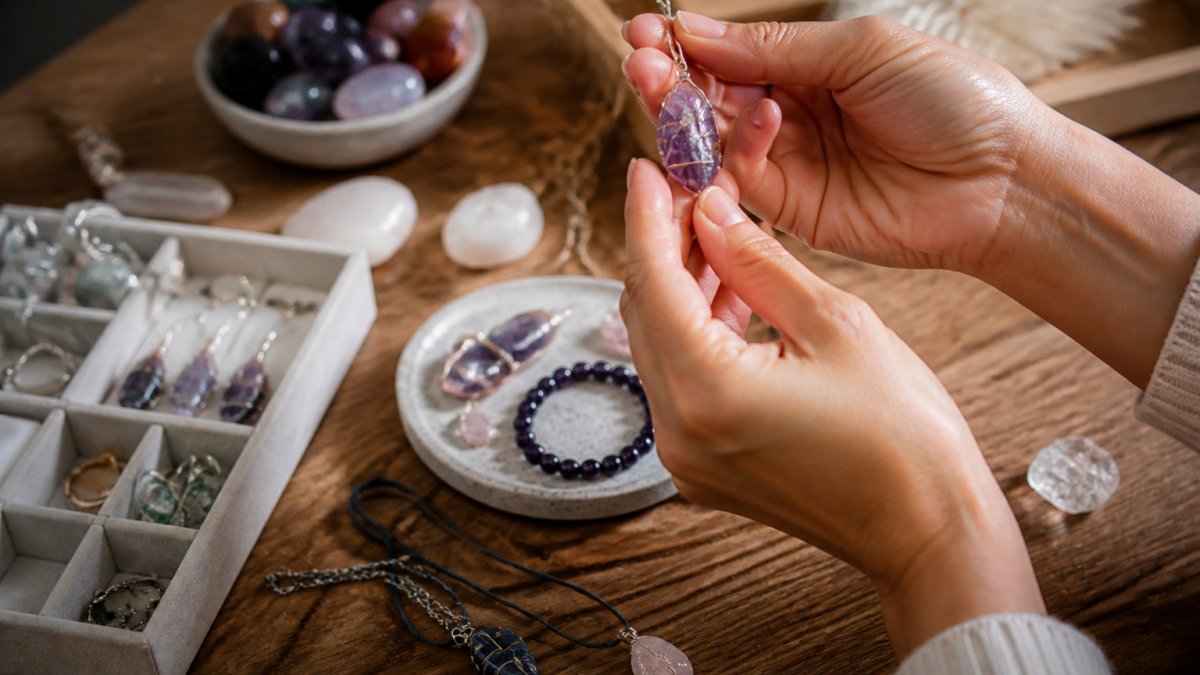
Natural gemstone jewelry gives everyday wearers a piece with real, unrepeatable character. Each stone carries its own color and patterning, which means no two pieces look exactly alike.
The practical advantages come next. Genuine gemstones pair easily with many outfits, from a workday blouse to weekend casual.
Beyond appearance, many people wear gemstones for personal meaning. Some choose a stone for its traditional associations, others simply because they like the color or the way it feels on the wrist.
Healing Gemstones and Their Meanings
Gemstones have been tied to symbolism for centuries across many cultures.
Crystal traditions attach specific meanings to individual stones. Aquamarine is often linked with calm communication and a sense of ease, while sunstone is traditionally associated with warmth and optimism.
These meanings are a valuable part of why people connect with a piece, but they should be read as personal and cultural associations.
Popular Stones and the Traditions Behind Them
Several stones appear again and again in jewelry and in crystal traditions. Here is how a few of the most common ones are typically described:
- Aquamarine: Traditionally associated with calm, clear communication and emotional ease.
- Sunstone: Often linked with warmth, optimism and personal strength.
- Rose quartz: Commonly associated with love, compassion and gentle emotional comfort.
Because these associations vary between traditions, the most useful approach is to choose a stone whose color and look you genuinely like. A stone you enjoy wearing is more likely to become part of your daily routine.
Crystal Healing Science and Evidence: Separating Belief From Proof
This is where honesty matters most. The meanings described above come from cultural and spiritual traditions. They are not established medical treatments, and there is no reliable scientific evidence that wearing a gemstone cures or prevents any disease.
A useful way to think about it is to separate three things. First, the cultural meaning a stone carries, which is real to the people who hold it. Second, the personal experience of wearing something you find beautiful or meaningful, which can genuinely affect how you feel about your day. Third, measurable physical or medical effects, which gemstone jewelry has not been shown to produce.
Why the Distinction Matters in Practice
Most claims you will see fall into a few predictable categories, and each deserves a different response:
-
Mood and emotional state. Wearing a piece you associate with calm or confidence can shape your own behavior, you may stand a little taller or pause before reacting. That is a real psychological effect, but it comes from your association with the stone, not from the stone acting on your body.
-
Pain, inflammation, and recovery. These are medical claims. No gemstone has been shown in controlled research to reduce pain or speed healing. If a seller promises this, treat it as a red flag.
-
Luck and prosperity. These are cultural and personal beliefs, not outcomes a piece of jewelry can deliver. They can still be meaningful as reminders of your own intentions.
The Placebo Effect Is Real, and That Is Not an Insult
The placebo effect is a well-documented phenomenon in which a person feels better because they expect to feel better, not because the treatment has a pharmacological effect. If wearing a particular bracelet helps you feel calmer, that experience is valid. The mechanism is your expectation and association, not the mineral composition. Understanding this helps you enjoy the piece without overstating what it does.
How to Read Healing Claims Like an Editor
When you see a claim about a stone, ask three questions:
- Is it framed as tradition or as fact? "Traditionally associated with calm" is a cultural statement. "Relieves anxiety" is a medical claim that requires evidence.
- Is there a mechanism? A claim that a stone "balances energy" cannot be tested because "energy" is not defined in a measurable way. A claim about a measurable outcome should point to measurable evidence.
- Who benefits from the claim? A seller has an incentive to make the stone sound powerful. That does not make the seller dishonest, but it means you should weigh the claim accordingly.
A stone you love wearing can be a meaningful part of your day. Just keep the cultural meaning, the personal experience, and the medical claim in separate boxes, and let a healthcare professional handle the third.
How to Identify Natural Gemstones, Treated Stones and Imitations
Knowing what you are buying helps you judge quality and price. Jewelry sold as "natural" may contain stones that are natural but treated, lab-created, or imitations made from glass or resin.
Women’s Aquamarine & Sunstone Bracelet | Natural Stone Jewelry →
Start by asking the seller to describe exactly what the stone is and whether it has been treated, dyed or heat-enhanced. Reputable sellers answer these questions directly. Look for specific stone names, not vague terms, and be cautious of unusually low prices for stones that normally cost more.
Simple checks you can make yourself include looking for natural inclusions and irregularities, which are common in genuine stones and often absent in glass imitations. Try these at-home tests to verify crystal authenticity for yourself. You can also review a clear set of tests to confirm whether your crystals are genuine.
Choosing Gemstone Jewelry for Your Style, Work Life and Gifts
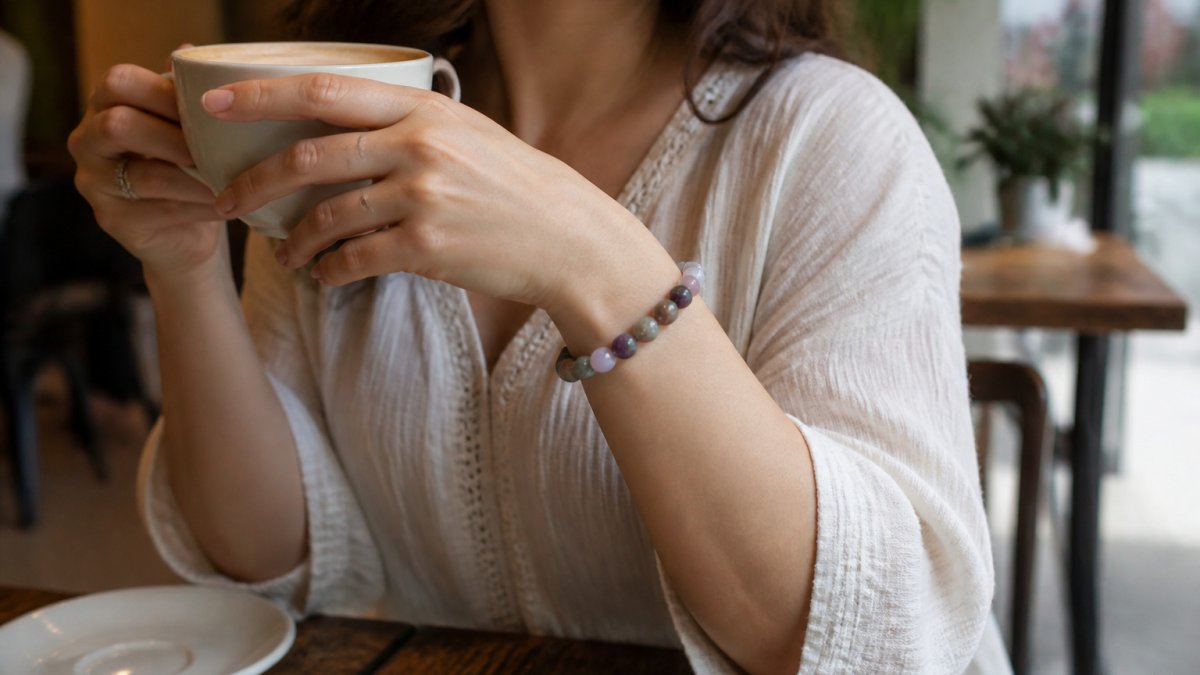
The right gemstone piece depends on how you plan to wear it. A delicate beaded bracelet suits everyday office wear, while a bolder stone can carry an evening outfit. Think about your usual wardrobe and whether you want a piece that blends in or one that becomes a focal point.
Start With Intended Use, Then Work Backward
The single most useful question is: where will this piece spend most of its time? The answer narrows everything else, stone, setting, and size.
- Daily wear at a desk or in meetings. Choose smaller, lighter pieces that will not catch on sleeves or keyboards. Beaded bracelets and stud earrings tend to work well because they sit close to the body.
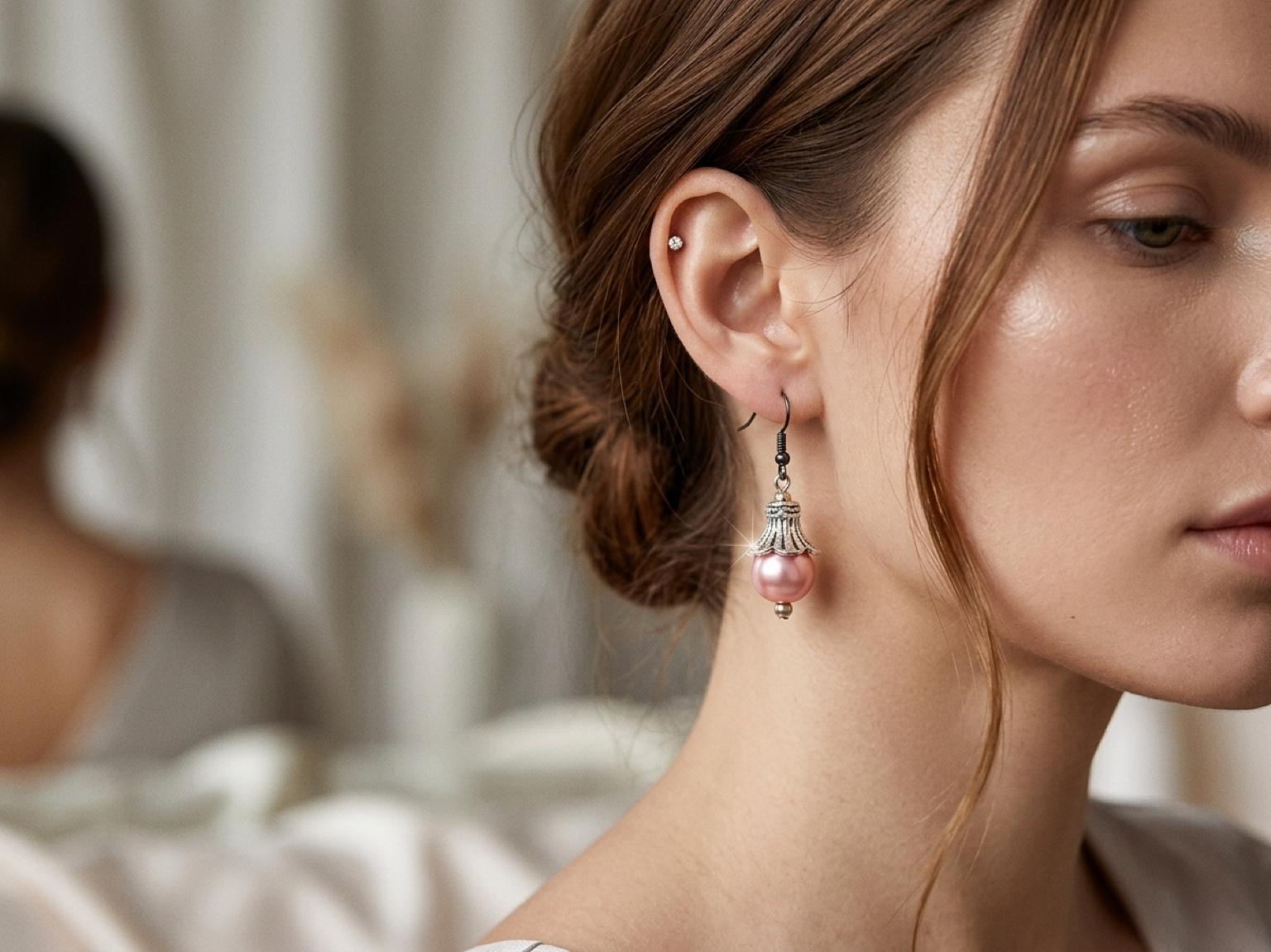
- Dressier occasions. A bolder stone or a dangle earring can be the focal point of an outfit. If you wear it only occasionally, you can accept a softer stone that needs more careful handling.
- Active use or physical work. Prioritize a secure setting and a harder stone.
Match the Stone to the Setting and the Metal
A beautiful stone in the wrong setting becomes a repair bill. Two practical rules help:
- Harder stones tolerate open settings; softer stones need protection. Stones rated 7 or higher on the Mohs hardness scale, such as quartz varieties, including amethyst and citrine, can handle daily wear in prong settings with reasonable care. Softer stones, including opal and pearl, are better protected in bezels or worn occasionally.
- Consider your skin sensitivity. Ask the seller what the metal in a piece actually is, especially if you have had skin reactions to jewelry before.
A Quick Selection Framework
Here is a practical way to choose:
- Daily wear: Pick smaller, lightweight pieces in a secure setting that stay comfortable all day.
- Dressier occasions: Choose a bolder stone or a statement earring, and accept that it may need gentler handling.
- Gifts: Match the color or meaning to what the person already likes, and favor adjustable sizing.
- Active use: Consider a sturdy bracelet with a protected stone that can handle regular movement.
Men's preferences matter too. Many men prefer simpler, darker stones and understated designs that do not feel overly decorative.
For gifts, a handmade piece can feel more personal. Choosing a stone that matches the recipient's color preferences or a meaning they already value makes the gift feel thoughtful. This is especially true for birthdays, anniversaries and other milestones.
How to Care for Natural Gemstone Jewelry So It Lasts
Good care keeps natural stones looking their best. For a detailed, safe guide to cleansing your stones, read step-by-step cleansing instructions.
Store each piece separately in a soft pouch or lined box to prevent scratching.
Cleansing methods vary by stone type. You can compare safe cleansing methods for different stones to pick the right approach.
Good care keeps natural stones looking their best. Here are the core habits the article recommends.
| Care habit | How to do it | Why it matters |
|---|---|---|
| Wipe after wearing | Use a soft dry cloth | Removes oils and dust |
| Limit water and chemicals | Avoid prolonged exposure | Can dull finishes or affect stones |
| Store separately | Soft pouch or lined box | Prevents scratching |
| Remove before activity | Before exercise, cleaning or swimming | Avoids impacts and moisture |
| Check before ultrasonic cleaning | Review care guidance first | Not suitable for every stone |
Choose Your Next Piece at GCDJewelry
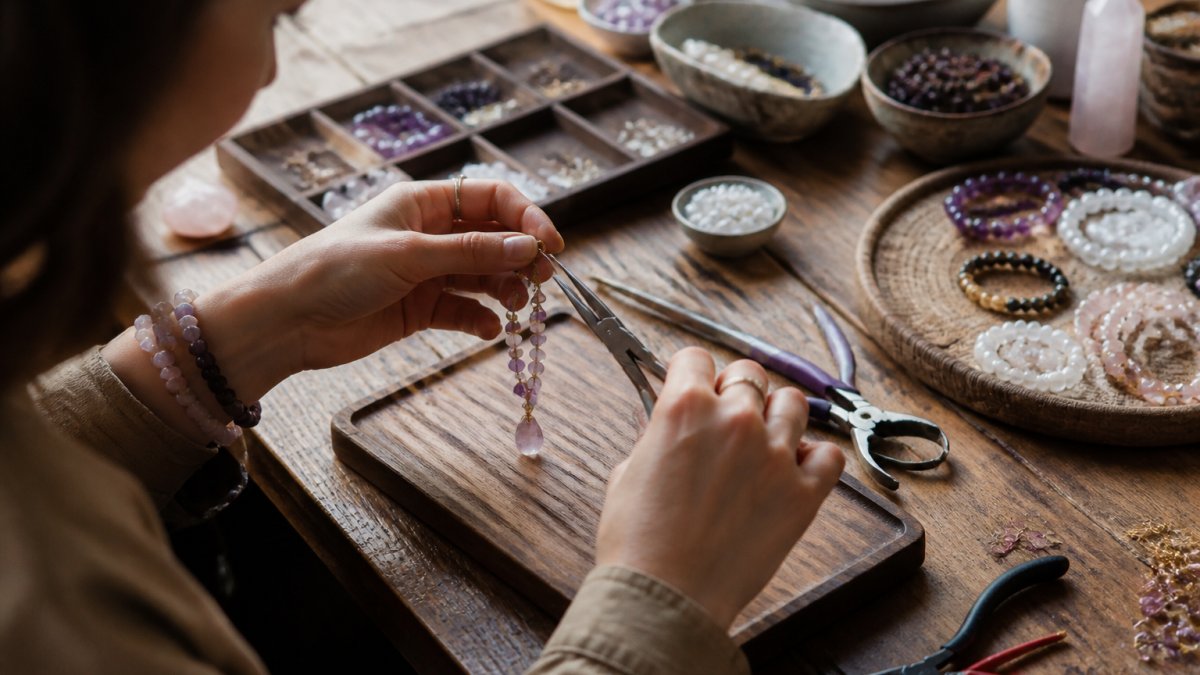
At GCDJewelry, we handcraft each piece in Ontario, Canada, using genuine natural stones selected for beauty and everyday wear. Our bracelets and earrings are made to be easy to wear.
If you are ready to find a piece you will enjoy wearing, explore our Women's Aquamarine & Sunstone Bracelet at $46.00 CAD, or the Green Aventurine & Rose Lampwork Glass Dangle Earrings at $18.00 CAD.


Frequently Asked Questions
What gemstone has healing properties?
No gemstone has a proven healing effect in clinical terms. Stones such as aquamarine, rose quartz and sunstone are valued in crystal traditions for calm, emotional comfort and optimism, and many people find that meaning personally meaningful. Treat these associations as cultural and personal beliefs rather than medical claims. If you have a health concern, speak with a qualified healthcare professional, and use gemstone jewelry as a meaningful accessory alongside, not instead of, proper care.
Is it safe to wear gemstone jewelry every day?
For most people, yes. Many natural stones are durable enough for daily wear, but hardness varies. Softer stones can scratch or chip with knocks, and some stones react to water, perfume, lotion or chemicals. Remove bracelets during exercise, swimming or cleaning, and store pieces separately. If you notice skin irritation from the metal findings or cord, take the piece off and consider a different clasp or setting.
How can you tell if a gemstone is natural?
Look for natural variation in colour and pattern, small inclusions, and slight irregularities in bead shape, since perfectly uniform stones are often glass or synthetic. Ask the seller whether a stone is natural, treated, dyed or imitation, and request a description of the material. Genuine stones often cost more than imitations. Buying from a seller who describes materials clearly and openly is one of the most reliable ways to avoid surprises.
Which natural gemstones are commonly worn for grounding?
Black onyx, red jasper and green aventurine are among the stones most often chosen for grounding in crystal traditions. Red jasper is traditionally linked with the root chakra, which crystal practitioners associate with stability. These are traditional associations and personal experiences, not scientifically verified effects. Choose stones that you find visually appealing and that suit your style, since wearing a piece you enjoy is a practical benefit in its own right.
How do you choose a gemstone for its meaning or appearance?
Start with what you like to look at, because you will wear a piece more often if you enjoy how it looks. Then consider the meaning that appeals to you, such as calm, warmth or luck, using traditional associations as a guide rather than a rule. Consider the colour palette of your wardrobe, the size and length you prefer, and whether the piece is for daily wear or occasional use. A gift can be matched to the recipient's taste and the stone's traditional meaning.